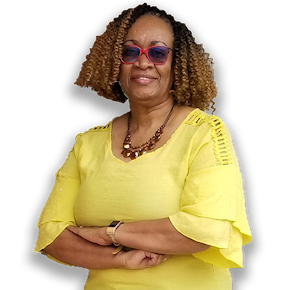

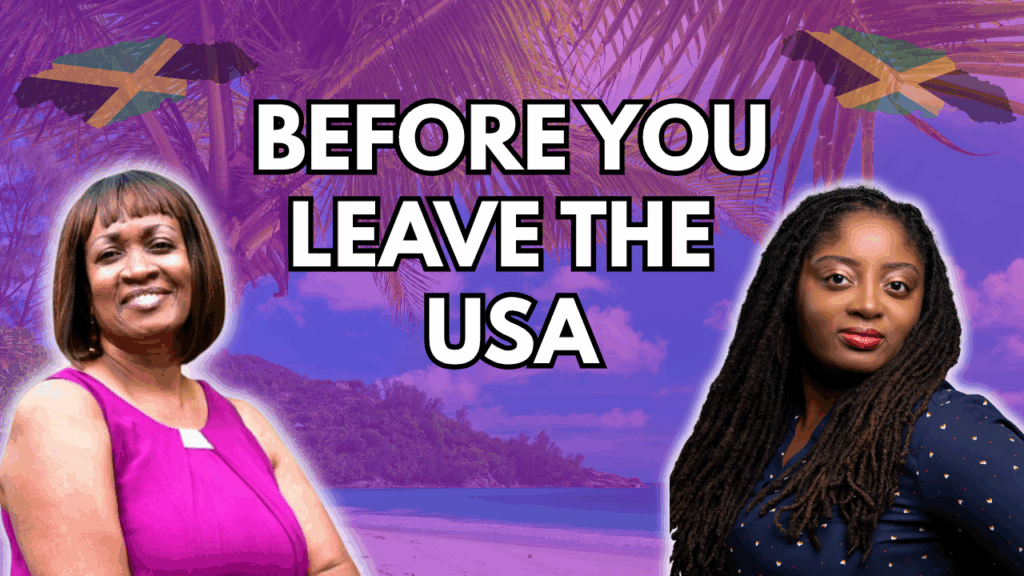
Thinking about moving abroad? In this episode of Dr. Sev Talks Money, I’m joined by a fellow Accredited Financial Counselor®, Tiffany Grant, who made the bold decision to leave the U.S. and relocate to Jamaica.
We talk about the financial planning, mental prep, and physical logistics behind a big international move. From what she would do differently, to the unexpected benefits (and a few honest challenges), you’ll walk away with powerful insights—whether you’re dreaming of life abroad or just curious about what it takes to make the leap.
In this episode, you’ll learn:
*How to financially prepare for a move abroad
*The mindset shifts needed to thrive in a new country
*Surprising pros and cons of living overseas
*Real talk on building a new life with intention
Plus, some laughs, cultural reflections, and advice you don’t want to miss. Ready to hear the real deal about moving abroad? Let’s dive in.
Connect with Tiffany. Website: https://moneytalkwitht.com/ Podcast: https://moneytalkwitht.com/podcast/
************************************
The Dr. Sev Talks Money podcast’s mission is to empower women to approach money confidently, reframe their financial habits, and build a future where their money is a tool for opportunity and security. Through Dr. Sev Talks Money YouTube channel and Podcast, I provide actionable advice and inspiration to help you achieve financial freedom. Join me for one-on-one coaching, group sessions, workshops, or speaking engagements as we journey to financial empowerment together. It’s never too late to begin again—let’s make it happen!
Here is one way you can support the Dr. Sev Talks Money podcast and YouTube channel:
https://www.buymeacoffee.com/DrSevTalksMoney
My website: http://www.sevtalksmoney.com
YouTube: https://www.youtube.com/c/DrSeverineBryan–SevTalksMoney
LinkedIn: https://www.linkedin.com/in/severinebryan/
Podcast Transcript
What kind of financial preparations did you make before the move? And what, in hindsight, would you have done differently? Yeah, I’m glad you asked that. You got some really good questions. So one thing I did in preparation financially was I made two different budgets. So I was already budgeting. But I made a separate budget with what would it look like once I move? And then I compared the two and I realized that some stuff was cheaper, some stuff was more expensive.
Hey, hey, hey, savvy squad. Welcome to another episode of the Dr. Sev Talks Money YouTube and podcast where we empower women to manage money confidently. Are you thinking about moving to another country? In this episode of Dr. Sev Talks Money, I’m joined by Tiffany Grant, creator and host of the Money Talk with Tiff blog and podcast. Tiffany made the bold decision to leave the US and relocate to Jamaica. And on today’s episode, we’re going to talk all about it. Tiffany, welcome to the Dr. Sev Talks Money podcast.
Hey, hey, hey. Thank you so much for having me. I’m excited to share. Alrighty.
Okay. I’m certainly excited to have you because I am the opposite. I left Jamaica to come to the US So I’m sure we will have a lot of things that we can talk about. But before I get into the meat of the podcast, I love to kick it off with an icebreaker question. If you had to pack only three non negotiable items to take with you when moving to another country, what would they be and why? And I’ll share mine in a little bit.
Well, I will say for me, it would have to be my computer, my phone and my podcasting mic. I think I can do only because I’m like, I’m thinking about, I have to still make money, I have to still, you know, run my business. So those are three things I have to have in order to do that. And because I can’t live in another country without any funds.
So yeah, yeah, that, that’s, that’s understood. Well, for mine, it’s very similar. I was smiling when you’re sharing because I was like, my phone, because my Kindle is on there, my Bible is on there. So I need all of that and then my computer so I can run my business and then my garden. I don’t want to take my garden with me. No, that’s not possible. I want to take my whole garden. My okra, my tomatoes, my. All the stuff that, that’s beautiful and out there, the watermelons. Oh, my word. So I would want to take my garden. Gotcha, Gotcha.
I did. So to piggyback on that, I didn’t have a garden back home, but I actually have a garden here. So I started a garden.
So it’s an option. Yeah, it is so relaxing. And there is nothing like picking your fresh fruit and vegetables and making your own meal from it. It’s just, it does something. It’s hard to explain because I just made some Okra and tomatoes and peppers together, all from my garden.
Now, I mean, if we gonna talk about food, because I am a bonafide foodie, and I just made a post that mango season is about over. So I just, like, I know. It was so wonderful.
I’m so jealous. I love mangoes, but. All right, so let’s jump right into it. Before we even jump into the logistics and the moving and all of that, can you introduce yourself to our listeners and tell us a bit about your work as a personal finance professional?
Yeah. So my name is Tiffany Grant, and I run Money Talk with tiff, which is a financial education platform in the form of a blog, a podcast, social media presence, so on and so forth. But my main goal is to educate people about different money topics and mainly small business owners and entrepreneurs or people that want to be entrepreneurs. So that’s kind of like my niche. And as far as personal finance is concerned, I’ve been doing this since 2017. I absolutely love it. It’s definitely a labor of love. We did not roll in the big bucks.
However, it is very fun, and I’m very passionate about it. So, you know, for me, this is kind of like my life’s journey, my life’s goal, and that’s pretty much me and what I do.
Okay, awesome. And for those of you listening, we are going to be sharing all of Tiffany’s contact or link to our podcast or website, all of the stuff, so. So you’ll be able to connect with her. So what sparked your decision to move from the US To Jamaica?
So there’s a few things, and I love when people ask me this question because it’s so multifaceted. So I would say the main thing was health concerns and health reasons. So when I was in the States a few months before I actually made the decision to leave, I was dealing with a lot of health issues in terms of, like, high blood pressure, swelling. I was seeing, like, at least two to three specialists. They couldn’t figure out what was going on with me, and nobody can figure it out. Well, I went to Jamaica on vacation because I was also newly finalized divorced. This was last January. And I was like, you know, I want to take a vacation to celebrate.
And then also, you know, just to relax and enjoy. And so I went to Jamaica for, like, two and a half weeks or so. And while I was there, I actually forgot to take my blood pressure medication. And when I got back, I said, well, I haven’t taken it in so long. You know, let’s just see what happens. So When I went back to the doctor, they were like, oh, your blood pressure is normal. And I said, and all the swelling and everything has started going away, so I’m, like, interested. And they were like, the medicine must be working.
And I said, well, I haven’t taken that medicine in, like, a good month now. So they were like, really? They were shocked. And they were like, well, whatever it is you’re doing, keep doing it. And that’s when it clicked and dawned. Dawned on me. I’m like, shoot, whatever it is I’m doing, keep doing it. So is it the food? Is it the environment? Is it the stress level? Like, what was it about Jamaica that had such a profound impact on my health? So that was one thing. The second thing is I just love it here.
I love the weather, I love the people. I just love everything about it, honestly. And I’m actually Jamaican, my dad is Jamaican, so I have family history here as well. Not particularly where I stay, but and the island in general. So I’ve always felt this connection to the island. And then I also realized when I was there for that trip, matter of fact, when I came from my first trip back in 2022, in 2022, I realized that I can work from Jamaica. So that kind of, you know, quelled that feeling of, okay, what if. What.
What about work? What am I going to do? And when I took that first trip, I was here for like a month. So I was like, okay, this is. This is doable. I can kind of do both. So between having the digital nomad type business and my health concerns, and then also just trying something different, you know, in life, I always have this philosophy where I’m like, whatever you want is on the other side of fear or everything you ever want on the other side of fear. So I was like, when I feel. Feel fearful of something, that means maybe I need to go ahead and do it. And I always said, like, all the way up to the day I left, I was in tears the last week, but up until the day I left, I said, worst case scenario, I can always just move back and life goes on as normal.
So I’m like, I rather take a chance and try something different that I’ve already seen has had positive effects on my life than to just sit back and say, I shoulda, coulda, woulda.
Yeah, I love that. I love that. Because you want to make sure that you’re maximizing your life the best way you can. And I’m actually in the process of researching where I want to move now that I’M retired and my US dollars need to go a little bit further than it can in the US So I am actually researching several places. And of course, me being an accountant in finance, I have spreadsheets. Okay.
For days.
Yes. So that leads me to the next question. What kind of financial preparations did you meet before the move? And what, in hindsight, would you have done differently?
Yeah, I’m glad you asked that. You got some really good questions. So one thing I did in preparation financially was I made two different budgets. So I was already budgeting. I’ve been budgeting for years that I love budgeting. That’s like my thing. That’s how I started Money Talk with Tiff Budget Queen. But I made a separate budget with what would it look like once I move? And then I compared the two and I realized that some stuff was cheaper, some stuff was more expensive.
One thing that I didn’t realize was expensive was schooling. So I moved here with two kids. Two of my three kids. I have three. Well, now they’re 11 and 2. When we moved, there were 10 and 1. But I was like, for my 11 year old, I didn’t realize how much I would have to pay in school. So even though he doesn’t go to a private school, he goes to a public school here in Jamaica.
There’s no public transportation. You have to buy all the books, you have to buy all the uniforms because everybody has to wear a uniform. And all these different things that I didn’t account for back home. Like, back home, he went to a public school that was also in. It was a Title 1 school. Sorry, a Title 1 school. So everybody got free lunch, free breakfast, and there’s school buses. So I didn’t have to pay for transportation.
And there was no uniform. So all of that stuff I kind of didn’t factor in enough, I don’t think. So that was a surprise when I first got here. And then also I will say water, because water here. I live in Negril, Jamaica, so on the west side of Jamaica. And water can sometimes just cut off. You can have it one day, you cannot have it another day. And so I am blessed enough to have a tank on the house that I rent.
But I will say it was like day two or three and I’m having to call the water truck because it was like mid drought season. So that was another thing that I was not prepared for, per se. Luckily I had already had money saved up and, you know, I could get through these hiccups. But there were some things that, you know you just, even if you do an extended trip, you just don’t get like, even me being here for a month, two weeks, three weeks at a time, my son is not enrolled in school here. When we did have water issues, you know, we could call somebody, you know, they got it settled if we’re in the Airbnb. But me being here and actually renting on my own, understanding what all that entails.
So, yeah, yeah, yeah, I can, I can relate to the water.
Yes.
There are some, there’s some things I’m putting on my list, you know, like infrastructure and different things like that, and can I live with this or. Or not? And pros and cons of different things. So I definitely understand.
But I mean, to go back to your question, though, I did have quite a bit say I had a little bit saved up. I’m not going to say a ton because that’s just not how I roll. I just be like, oh, let’s just go with the flow and see what happens. But I know I did at that time have like, for instance, my tax refund, I had a little bit in savings and I also had investments and stuff too. So I’ll say I had a decent amount saved up, but it wasn’t like, oh, I was preparing for this for years. Like, it was like a decision I made in February and I moved by May, so it was pretty quick.
Yeah, yeah, yeah. And here I am thinking by the end of next year and see, and.
That’s my thing, like, we can get into analysis paralysis, and then we end up not making any moves at all. So for me, I have another philosophy. So you’re, listen, you’re hearing all my Tiffany isms. My other philosophy is ready, fire, aim. So instead of ready, aim, fire, ready, fire, aim. So get ready enough to go ahead and fire and then you can always, you know, fine tune it and tweak it as you go. But you’ll never know until you take that first step. So there’s things that I could have sat here and analyzed and tried to predict and things, and I would have never seen it until it actually happened.
So.
Yeah, yeah, unfortunately for me, well, I don’t know unfortunately, but my mom, who’s in her 80s, I drive to Florida from Georgia to take her to the doctor for her appointments. And, and so I don’t want to be far from her. And so I’m working things out. So that’s what the main hold up otherwise. And then, of course, my garden.
If you don’t, you know, you can have a beautiful lush Garden. Well, depending on where you move, I can only speak for here in Jamaica. I don’t know what it is about this land, but this land is extremely fertile and you can plant some of everything here.
So. Yes. And actually my dad worked with the Ministry of Agriculture and he had lots of farm, so we would go with him, pick pimento. And one of the houses that there, that’s owned by me and my sisters, we have jackfruit, oranges, tamarind, bananas, mangoes, all kinds of things on the land. So. So, yeah, I could create a new garden.
And I’m like, don’t that garden sound like more, you know, stuff that you can’t even get where you at right now?
Yeah. All right, so let’s talk mindset. What were some of the biggest mental or emotional shifts that you had to make before and after the move?
Yeah, so I will say, well, I already talked about one, and that is to kind of look fear in the face and just go for it. Anyway, I was very scared because, mind you, I’ve never lived in another country, let alone another state, in my adult life. I had moved to North Carolina when I was 12. So I’m like, everybody I know and everything that I know, know is here, you know, in this place. And so that was one thing that was kind of nerve wracking, to be honest. And like I said, I was in tears up until the day I left. Like, that last week was extremely hard. So.
But. And I almost talked myself out of it, Almost talked myself out of it, almost said, well, you know, just maybe now is not the right time because things started, like, snowballing back home. Like things just wasn’t working out. And I’m just like, what is going on? But I say, you know what? No, I have a strict deadline. This is where I’m. This is what I’m gonna do. I’m doing it. So I just did it regardless of what else was going on.
So that was. One second, I would say culturally, it’s a lot different. So culturally, like, even though I’m Jamaican, living here and being in the actual Jamaican culture is completely different than American culture in a lot of different ways. And so I’ve had to do a lot of unlearning to relearn because I also learned that in America there is a lot of programming that happens. And so for me, I had to unlearn and also just realize that a lot of this stuff that I’ve believed and thought and stuff my whole life, it’s not, you know, it’s not the reality, or I’m not going to say it’s a lie, but it’s just not, you know, what it is in real life. I’ve realized that America is like its own microcosm. Like there’s nowhere else in the world that thinks like Americans. So I would agree, I would agree with, yeah, I mean, in all my travels, not just here in Jamaica, like everywhere I’ve been in other countries, they’re like, you can tell an American if that makes sense.
And so just getting out of that and embracing a different culture and in my opinion, a better culture, I feel like that it’s like every day unlearning and relearning something new, new. So I think that’s an ongoing mental thing. So being open to actually embrace wherever it is you’re, you’re moving to not just saying, oh well, this is how we do it or this is what you need to do or, you know, whatever, whatever. It’s more about, okay, how are they doing things different and is this actually better for me and my well being. So, like, for me, to give you an example, when I moved here, I don’t have a washer and dryer. I wash all my clothes by hand, hang them out on the line. That’s something I never really did in the States. I have never been without, very rarely a dishwasher and a washer and dryer and a vacuum. But those are things that I do not have here. And so at first I was like, oh, I need to get a washer. And then I was sitting there washing my clothes by hand and I’m like, but this feels good. Like this is relaxing, this. I’m like actually sitting with my thoughts and you know, thinking as I’m washing and stuff.
And then same thing with sweeping, you know, instead of using a vacuum. So some of that stuff going to the, and I know this is going to sound crazy as somebody who’s a tech head, but going back to like these fundamental and foundational things that I just think it’s better for health and well being, in my opinion. And then also to that point, my son, when we were in the States, he was diagnosed with ADHD. And here I’ve noticed that his symptoms aren’t as bad, so he’s actually able to focus better and things of that nature. And I attribute that to potentially because they don’t have devices, they don’t have computers and tablets and stuff in the classroom, they learn here like we did. We have the blackboard or the whiteboard, we have our notebooks, and we have to write everything. So his handwriting has improved. His.
You know, he’s not really dealing with too much ADHD stuff anymore. So it’s just, I think, going back to basics. I think America really handicaps us in a lot of ways when it comes to just functional, fundamental stuff we don’t do.
Yeah. And sometimes convenience costs. It costs our health, sometimes mental health. It costs so many other things, and we have to really step back and see how. Yes, it’s convenient, but at what cost to us.
Exactly, exactly, exactly. And, you know, speaking of that, that’s one thing. For instance, you know, back home, everybody eats fast food all the time. You know, it’s like. Like every day you might have at least one meal. But here, even the fast food is like from a restaurant. You know what I’m saying? So, like, it. Not like these.
I mean, they do have the big chains like a Burger King or, you know, what have you. But a lot of the fast food, like, if you’re going somewhere, you go and order some real food and then you take out with you if you, like, for instance, there might be soup and porridge on the street. You might get some soup and porridge, but it’s all fresh and it’s all good and it’s not overly salty or chemically laden. So, yeah, just going back to your convenience thing.
Yes, yes. Yeah. Because I. I grew up. I did not do fast food when I grew up in Jamaica. And even now I don’t do a lot of fast food because I’m used to cooking at home and, you know, having my porridge, my soup on Fridays and my this on Saturday or big meal on Sunday, those kinds of things. So.
So let’s talk a little bit about.
Some pros and cons. What are so a couple of maybe pros and cons of benefits and. And drawbacks of you moving to. To Jamaica. And I know you mentioned a few, but are there some other ones that you want to mention?
I think more pros. One would be community. You know, back home, I had my house for what, seven or eight years or so, and I barely knew many of my neighbors here. I moved in, like the first week or two, and I knew almost everybody on the lane.
So.
Community is held in much higher value here. And even, matter of fact, the other day, my car needed to go to the mechanic. I already had an appointment, but I wasn’t feeling good, and my neighbor actually drove my car to the mechanic for me, because I needed to keep that appointment. So it’s like there’s definitely more community here. We’re always doing stuff for each other, checking on each other. You know, everybody says you’re good, you good. So I really love that. I’ll say, let’s see a con.
Another con would be, oh, I think for me, just because of how active I was back home. And this kind of goes on the other side of community. There’s not much like business networking and stuff like that. Like that type of stuff that I’m used to, which, don’t get me wrong, I can fix. I just had this conversation this morning. But you know, that piece I think is missing for me as far as like the networking. You know, in the States we’re used to going to networking events and doing this, doing that, and that’s kind of few and far between here where I am now. I heard that it’s better in Kingston, but I’m in Grill, which is more of like a touristy, you know, not like a Kingston.
So. So I feel like that’s one con that I really miss is just that community of like business owner, friends and co working and you know, that type of stuff. Now people might say, but Tiffany, you can go work on the beach. Do you really need coworkers? But yeah, and that’s. I think that’s another misconception too. Real quick, while we’re on it, I don’t go to the beach every day. Not even every week. Honestly.
There’s some other expats here that, you know, they go to the beach often. But when you live here versus visiting is completely different. So, you know, even though the beach is as close as I’ve ever been to a beach in my life, it’s like. And I love water. Don’t get me wrong, I still have life. So.
Yeah, isn’t that funny how that works? Because it’s the same thing. When I was in Jamaica, I mean, the beach was right there and I just went on special occasions, you know, because I guess because, you know, it’s there and here, even living in Atlanta, there’s lots of things that you can do. But I was like, ah, I’ll go next year. You know, it’s. It’s there. I know it’s there. It’s available when I’m ready, so there’s no urgency.
Right, right, right, right. And. But I feel like that’s what people are like, oh, I wish I could go and live on that beach. Beach, like when you live is completely.
Different than visiting so, yeah, yeah, it’s not going to be 100% honeymoon stage life.
Right, Right.
So for anyone who’s listening and maybe considering an international move, what are maybe two to three key pieces of advice that you. You’d give them today?
Yeah. So one thing is to definitely do your research. So see what the visa requirements are, see what the citizenship requirements are, you know, that type of thing. Because don’t want to be somewhere illegal. So I kind of said that, tongue in cheek, but, you know, it’s real. You. You want to make sure that you abide by the laws of whatever country you’re deciding to move to. I’ll also say do research on all of the essential stuff.
So what does housing looks like? What does food look like? What does transportation. That’s another thing. Like, what does all of that look like? Also research, healthcare. Like, what would that look like wherever you go? So do they have good doctors or would. Would you be considering going back to the States for your care or, you know, just considering what that looks like. If you have young kids like me considering their schooling and stuff like that. Of course.
What I loved and what I’ve learned is that I really enjoy this curriculum better than the US Curriculum because I don’t know what they’re doing with Common Core math.
You have to do 20 million steps to get the answer.
I don’t understand. And I realize that here they learn how I was taught. So I’m like, this is way easier, especially for a kid that’s neurodivergent. So that was a plus. Also a plus with the schooling here was, you know, as you can see, I’m black, and all of the material has black faces, which was important for me. You know, being somewhere where, you know, you’re underrepresented most of the time, and then being somewhere where you are the majority is, like, completely different. It just feels different. So I’ll say consider that.
Consider language barriers, if any. Like, if you’re going to somewhere that doesn’t speak English. I know even here, for instance, I had somebody come visit because they were like, oh, I want to see if I want to, you know, move to Jamaica. I said, well, come stay for an extended period. And I offered up a room in my house. But while they were here, they could barely understand what anybody was. They would always look to me like, okay, what they say, you know, kind of consider that too. Even though it is English, you know, it’s a different dialect.
So, you know, consider that. I’m trying to think what else oh, and culture, like I said before, culture. Understand what’s appropriate in the culture, what’s not appropriate. Like, to give you a funny story, I was told I eat mangoes wrong. And so I learned the culturally appropriate way to eat mangoes.
Tear it with your teeth. You don’t have to feed or not.
Look, I’m not going to say what I did because they said, do not tell nobody you used to eat that. But I learned the appropriate way. So all of that to say, get, you know, appropriated to the culture, understand the culture, and realize what’s important and what’s not important. I’ll say, another cultural lesson I learned here was you always greet always. So you always say, good morning, good afternoon, good evening, good night, even. And in the States, you know, it’s not like that. You. You walk around, you say, good morning, good morning.
People looking at you like, what’s wrong with you? And especially depending on where you are in the state. So I think just understanding those little nuances and learning those nuances will help you go a long way. So, yeah.
Yeah, I do. They still call older people, like, Mr. Brown or Ms. Ms. Brown, and you never say the person’s, like, name. When I came here to the US it was an adjustment to call my supervisor by the first name, because I was used to saying Mr. Brown, Ms. Brown, Mr. John, or whoever. So it really was an adjustment.
Oh, yeah. Like, here, they. They have manners. They have manners here.
And if you don’t speak, you need to speak. Why are you not speaking?
And see, one of my issues just being fully transparent is my voice is very low. Like, in person, my voice is very low. And so, you know, I’ll say good morning, but sometimes people don’t hear me, which, you know, my Jamaican side is like, tiffany, you need to, you know, talk Jamaica, you need to be a little louder. It’s just not in me. So, you know, when I say stuff, sometimes maybe people don’t hear me, and then they’re looking at me like, okay, so she’s not gonna say anything. So I’ve also kind of learned to, you know, make my voice a little louder. So that way culturally. Because if not, you know, you’re gonna end up with.
I’m not gonna say enemies, but people are just gonna be like.
Yeah, she too standoffish, or something like that. Yeah.
Completely different.
Yeah.
And. And Jamaicans can tend to be loud. And you think they’re. They’re gonna fight? No, they’re Just They’re just passionate when they’re arguing a point. You’re so Passionate and you think you’re going to come to blows and. No, they’re not.
No. I’ve heard so many. Well, I can’t say it on the podcast, but I’ve heard so many explicit, explicit words, and I’m like, dang, what’s going on over there? But it’s all good. People buying drinks for each other afterwards. So.
Yeah, yeah, yeah. Is there anything else that you’d like to leave the audience with before we talk about where they can. They can best contact you?
Yeah, I think if you didn’t get anything else from this episode is to research and analyze, but don’t overdo it. Make the step, see what happens. Worst case scenario. Like me, I had. I still had my house back home. I was just renting it out Airbnb, and I still have my car and everything back home. So I was like, okay, if things don’t work out, I can just go back home to the usual. So I’m like, you know, take the chance, see what happens.
Worst case scenario, you go back to where you came from and all is well. So don’t think that even though it is a big decision and it’s a hard decision, there’s a lot of people out here doing it. There’s actually a huge expat community here in the Negril. Matter of fact, let me put a plug real quick. I’m an admin for a Facebook group called Black Expats, Pets in the Grill. So if you want to join us, please, come on. But there’s a lot of people that’s already out here doing it, been doing it for years. There’s expats that have been here for 20, 30 years, you know, and so don’t think that you’re alone.
And wherever you decide to move, there’s probably a Facebook group for it. So check it out.
Yeah, and I’ll get that link from you and I’ll put it in the show notes, too, because I am interested in exploring that. So before we close out, can you tell our listeners where they can find you if they want to connect with you or work with you?
Yeah. The best place to go is my online real estate, Money Talk with t dot com. So that’s Money Talk with tea dot com. That is my home base. You can find everything it is you wanted to know about me and everything you don’t on the website. So definitely check it out. Out. Yeah. And those are for those of you who are watching. It’s. I have it up on the, on the screen and. And definitely will be in the show notes. So, Tiffany, thank you so much for joining me on the Dr. Sev Talks Money podcast.
I am sure that there are going to be a lot of people who may have questions, and I will have your information so they can go contact you and learn more. Because. Because I want to learn more because I need to let my little retirement money go a little further.
No, that’s real. And I’m happy to answer any questions.
Alrighty. So as we wrap up, please remember to subscribe to the podcast on YouTube. If you listen on Apple Podcast, leave a review and a rating. If you listen on Spotify, leave a rating. And as you are completing your ratings, please remember that we love the number five. Until then, this is Dr. Sev saying stay savvy and we’ll see you next time.