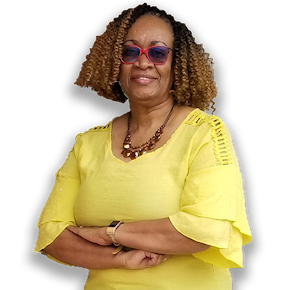

Feeling behind on retirement savings? You’re not alone. In this episode, we explore why it’s never too late to catch up financially and how women over 40 can build security and confidence for the years ahead. We’re tackling a fear many women over 40 quietly carry, the worry that there’s not enough time left to build true financial security. If you’ve ever thought, “I’m too far behind to catch up,” this episode will show you that it’s not too late to take control of your money and your future. My guest, Renee K. Collins, CPA, CFP®, AFC®, is the founder of Retire Ready, Inc. and a trusted guide for first-generation wealth builders who want to retire with confidence. With more than 20 years of experience in accounting and financial planning, Renee helps professionals over 40 create retirement strategies that align with their goals, values, and lifestyle. Her mission is to simplify retirement planning, empower clients to avoid costly mistakes, and build a legacy of financial wellness for the next generation. In this episode, you’ll learn: Why it’s never too late to start building wealth, even after 40 The first steps to take if you feel behind on retirement savings How to shift your money mindset from fear to freedom Practical strategies to maximize the money you already have How aligning your finances with your values makes wealth-building sustainable If you’ve been carrying the weight of financial regret or fear of running out of time, this conversation will give you both the hope and the tools to move forward.
Resources from Renee:
Free Retirement Guide: https://www.retirereadyinc.com/top10
Website: https://www.retirereadyinc.com/
LinkedIn: https://www.linkedin.com/in/reneekcollins/
****************************************************
The Dr. Sev Talks Money podcast’s mission is to empower women to approach money confidently, reframe their financial habits, and build a future where their money is a tool for opportunity and security. Through Dr. Sev Talks Money YouTube channel and Podcast, I provide actionable advice and inspiration to help you achieve financial freedom. Join me for one-on-one coaching, group sessions, workshops, or speaking engagements as we journey to financial empowerment together. It’s never too late to begin again—let’s make it happen!
Here is one way you can support the Dr. Sev Talks Money podcast and YouTube channel:
https://www.buymeacoffee.com/DrSevTalksMoney
My website: http://www.sevtalksmoney.com
YouTube: https://www.youtube.com/c/DrSeverineBryan–SevTalksMoney
LinkedIn: https://www.linkedin.com/in/severinebryan/
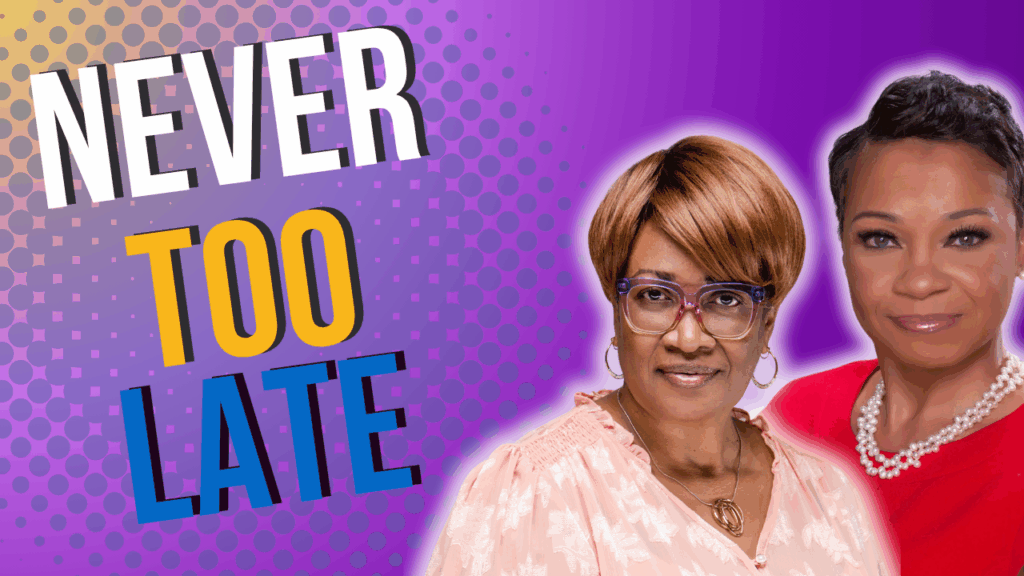
Podcast transcript
I want to go back to what we talked about initially, and that is just knowing that it’s never too late. So think about this. Even if you’re in your 40s, even if you’re, you know, in your 50s, you have a good 20, maybe even 30 years to save for your retirement. Because if you retire, say if you’re 40 and you’re going to retire, your. Whether it’s at 60, you, you know, or 65, that’s a good 25 years. You can do so much in that time frame. So don’t get caught up in thinking that, oh, I’m starting late because there’s so much you can do if you just get started now and just get started with what you have.
But the key is to get started, all right? Because we can easily get paralyzed and thinking that, okay, I haven’t done what I needed to do. So I don’t know what to do. So I’m just not going to do anything. So again, you have a good 20 to 25 years and then think about this. You’re going to be in retirement for another 20 to 25, maybe even 30 years, depending on the longevity in your family.
Have you ever looked at your retirement account, or lack of one, and thought, there’s no way I can catch up now? If that fear has been sitting quietly in the back of your mind, this episode is for you. Hey, Savvy Squad. Welcome to another episode of the Dr. Sev Talks Money YouTube and Podcast where we empower women to manage money confidently. Today we’re talking about the quiet fear. So many women over 40 carry the feeling that there’s not enough time left to build true financial security. We’re going to tackle that fear head on and show you that it’s never too late to create a plan that works for your life. My guest is Renee Collins, a CPA and certified financial planner who has spent over two decades helping first generation wealth builders align their money with their values, save money, invest wisely, and build lasting wealth with confidence.
Renee, welcome to the Dr. Sev Talks Money podcast.
Well, thank you. Thank you for having me. How are you?
I am doing well. I am excited about this topic because I am in that demographic and I do know that it is never too late to begin again.
Never too late.
That’s my personal motto. So I’m excited about this episode. Okay, so before we dive into the serious stuff, you and I know that money can be a little bit nerve wracking for some people. So I like to kick off with a little bit of icebreaker.
Okay.
If you suddenly found $5,000 in unexpected money, no strings attached, what’s the very first thing you’d do with it?
The very first thing that I’m going to do. That’s funny, because I am a money nerd. True and true. Okay, I’m being honest. I am. I’m investing it. You know, I am such a money nerd. I like watching my money grow.
So what, what can I tell you?
Yeah. I have been thinking about this one and I do want to travel somewhere because my plan is to leave the US and either go back to Jamaica or to Panama to live for a little bit because my retirement money needs to go a little bit further. So when I thought about the 5,000, I was like, what would I do with that? I could probably put some of it in investment. Because I’m like you. I like to see my money grow. I don’t like to see it subtracting and take some of it maybe to travel. We’ll see. That means we’re looking for 5,000.
Okay, universe.
I know. That’s right. Put that energy out there. Yes, absolutely.
And for everyone who’s listening, I want to know what you’d do. So drop Your answer in the comments or send me a DM if you’re a little bit scared of putting it in the comments when we post the podcast, you can put it in the comments there or on YouTube because we’d love to know what you would do to 5,000 if you suddenly had a windfall of 5,000.
Absolutely.
All right, so let’s go get into it. Renee, tell us a little bit about you and the work that you do so our listeners can learn about you and how you may be able. The work you do and may be able to benefit that.
Absolutely. So I am a certified public accountant, but I’m also certified as a financial planner and also an accredited financial counselor. The work that I do, my company. Let me tell you a little bit about my company. So my, my company is called Retire Ready and it is a registered investment advisory company here in, in Illinois. I live just outside of Chicago in the south suburbs. And my focus is really on working with first generation wealth builders like myself. So that’s generation X in most cases and helping them to really develop a healthy relationship with their money so they can save more so they can, you know, also invest and then build wealth.
So as I’m all about, you know, leaving a legacy, not a liability. So a lot of the work that I do is really around helping my generation to, to build wealth so they can retire ready, just like the name says.
Yeah, And I love that. So they leave wealth instead of a liability.
Absolutely, yes.
Because we’ve heard the horror stories, Right. Of people who have gone on and they could have done better in their finances.
Right, Exactly.
But they didn’t. And so the next generation has to start from scratch. And for those who of you who are listening, we don’t want that. And that this is the work that Renee does so that, the people who inherit from you doesn’t inherit a liability. They inherit something that they can build on for the next generation and onwards. So you work with so many women over 40. What are some of the common fears that they may have shared with you when it comes to money and time running out?
Right.
So I think that, you know, there’s that moment when you know women and it’s not just women. So most of the, the ladies I work with, they are married, but they have that aha moment. It’s something about turning 40 where they have that, you know, aha moment where it’s like, oh, wow, you know, I’m looking and thinking about retirement and they start to wonder, do I have enough? You know, and Then it’s always that fear that I’m in my 40s, I haven’t been saving the way I feel like I should, and I’m thinking it’s too late. So that I think that’s one of the biggest fear, I would say, that I see in the clients that I work with is they really believe, like, it’s too late for me to start saving. And I would say, just like you said, it’s not never, ever too late to get started.
Yes, I totally agree. I don’t want to share my story because it’s all about you today, but I can. I can attest to that.
Absolutely.
Yes. So we know that sometimes it’s not even about the money so much, the number, it’s the emotions behind it. And there’s an emotional toll that comes with someone feeling that they’re behind financially. So what are some things that women can start to do to maybe shift that mindset?
Right.
You know, do what they need to do?
Absolutely. So I would say, really, you know, we want to, as you know, before we can make any change, it’s going to start with having an awareness.
Right.
So having an awareness of, you know, what our financial situation looks like, once we have some awareness and some clarity around it, then. Then we can start to, you know, go ahead and, you know, move forward with a plan. But before we get there, in order for us to make those changes, we definitely have to have that, you know, mindset around. Okay. It’s not too late. Okay. Regardless of whatever situation you’re in, it’s not too late to go ahead and get started. And I think, you know, working with a planner, it’s helpful because they can help you to chart out those numbers, to get an assessment of where you are today and where you want to be in the future.
But we got to get our head wrapped around the mindset piece and understanding that wherever we are, it’s not too late. And if we go ahead, take a look at the numbers and start to get an assessment of what our finances look like, we’d be surprised what we can do in a short period of time.
Yes, I totally agree. And another thing, too, where a financial planner or any financial professional can help is they are not emotionally vested in the numbers.
Exactly.
When we’re tied to it, we just want to. We want what we want, and we. We make it happen whether it’s right or wrong. Whereas a financial professional will come in and have a really good look at the numbers and can help you chart and say, yes, you might want to Go here, but think about going this way and. And see the benefits. So.
Yes, that’s right. They can bring that objective perspective, which is very helpful.
Yes. Yes. And you talked also about aligning money with values. How does that help women make faster, more confident progress? Because I can see that happening in my mind’s eye. Once they’ve aligned their values, then the. The trajectory becomes. It’s clearer in my mind.
It helps you to focus.
Right.
Because we, every day we are inundated with so many different messages around buy this, buy that. You know, we’re on social media, we’re on TikTok, you know, and so we have all of these messages that are coming at us telling us this is what you need to do with your money. And so it’s easy to get distracted. But when you have values and your doubt into your values, when you really know what’s important to you, then you can start to shift and focus your money on what’s important to you. Right. That’s where that clarity comes in. When we can start to take our money and say, hey, this is important to me. I want to retire at certain.
At a certain age. I want to leave a legacy, you know, for my family. When you do that, I. This is when I’m doing presentations, what I tell, you know, my audience is like, it’s like putting these blinders on. Think about, you know, if you look at a horse and they are racing, like in the derby or something, Right. They put these blinders on so that that horse can stay focus on what’s in front of them, because it’s easy to get distracted in today’s world. But when you have. When you have those values in place, you’re focused.
Yes. And again, I can’t say enough how much a financial planner, a financial professional, can help bring clarity to those numbers, because you can be as focused as you want to be, but if you don’t get the help to bring clarity to your numbers, you can be focused on the wrong thing. So.
Very true.
Yes. Yeah. So you do want to. And. And when you invest in a financial professional, it’s an investment. And I use the word invest in a financial professional because it’s not an expense.
Right, right.
It’s an investment.
It is an investment, I think, because.
It’s going to bring a return.
Yes.
You know, peace of mind is going to bring you strategy. It’s going to bring you the things that
Right, Absolutely. And there’s been research that shows that the the people who work with a planner versus those who do not typically have more clarity of mind over their goals. And it just. I think there’s a certain level of confidence that comes with that, too.
Yeah, I believe it. Now, we know there’s a lot of misconceptions and myths around money. What are some that you may have seen about retirement readiness for women 40 plus and over? And I know we talk several times about it’s being too late, but what are some other ones that you may see around that?
Let me think about that. What are some of the bigger ones? I think the biggest one, of course, is the fear.
Right.
That it is too late. You know, and then I think the other thing that I would say, too, that I find with women, and I don’t know if I would say that this is a myth as much as I would say one of the. A pattern that I see with women a lot of times that I work with them is that they will, you know, invest a little bit more conservatively than the men do. And, you know, and I don’t know if that’s just, you know, maybe that’s a confidence thing. We don’t get a lot of financial education around money and investments. And so, you know, it’s. I think, you know, we may not feel as certain, you know, with the choices that we’re making because, you know, we’re. We’ve been told that, okay, you have to save for your future, but we haven’t necessarily been given a road map or blueprint on how we do that.
Right.
And so I think, you know, because all of us, you know, men and women, we don’t want to make a mistake with our money. And so we will tend to be a little bit more conservative than we should be. You know, and so I think when we can begin to educate ourselves around money and really understand how the market works, that would be helpful in and making informed decisions with our money. And how do we invest so that we can retire with, you know, like you said, retire. Have that retire readiness.
Yes.
Feeling confident.
Yes. I love it. I love it. And. And I know that those who are listening can relate to what Renee is sharing. So for someone who’s listening right now, what is maybe a step that they can take this week to. To. To.
They may be feeling completely overwhelmed. They may not know what to do. What is one first step that they can take?
You know, what I would say is that one first step I would say is pull out your bank statements.
Right?
Pull out your bank statements and just take a Look at your bank statements so that you can see where your money is going. That would be the first step because that’s, again, that’s that awareness. If we want to affect change in our lives, then the first step is going to be awareness. I would recommend just looking at your bank statement to see how much money you have coming in and then how much money is going out and where is it going. Okay. And then ask yourself, is this money going, you know, in the direction that is important to me? Is it going in a direction that is going to help me to meet the goals that I say is important?
Yes. Yes. And that’s key, right? The goal that I say, I say important. Yeah. If I say this thing is important to me, what am I doing to make sure that that’s carried out? Am I derailing? Am I, you know, doing something to derail the goal that I say I want to achieve?
Absolutely. Absolutely. And again, it goes back to those distractions.
Right?
There’s so many different, you know, things that are vying for our attention and our money. So that’s why the values are so important. Because again, when we know what’s important to us, you know, all that other stuff, you know, it’s not going to matter as much, you know, because you have a plan, you have a vision.
Yes, yes. So I know you mentioned that you’ve had your own financial missteps. Would you say that that has helped you in the way that you guide others?
Oh, yes, for sure. Because I was a single mom. I raised my son as a single parent. And one of the stories that I share with people often is that when I, when my son was probably about, maybe about seven or eight, I lost my job. And that was so eye opening. If anyone has ever lost their job, you know, then, you know, and you can relate to what it is that I’m saying. And, and at that time, I mean, I didn’t have any other source of income and, you know, I didn’t have any savings, didn’t have any emergency fund. And after I navigated my way through that, I said I would never, ever put myself in a situation like that again.
And so that has definitely had an impact on, you know, I think one of the reasons why, you know, I do the work that I do, because I’ve been there. And so I know what it feels like to have that stress and to, to not have a plan because I didn’t have an emergency fund, I didn’t have a second source of income, nobody was coming to save me. So that was A, it was a tough time in my life and I really would not want anybody else to have to go through that. That’s why I do the work that I do.
Yes, yes. I love it. So let’s talk to the woman who has already. And men who have already saved something. How, how can they best maximize what they have in the, in the years ahead?
So I think it’s really going to be dependent upon the goals.
Right.
So whenever we’re talking about investing, you know, before you start investing, you want to make sure that you know, what is your long term objective, what is the reason that you are investing? Are you investing so that you can buy a home? Are you investing to leave a legacy? Are you investing for, for retirement? Having an objective for your money, that’s going to be the first step.
Right.
And then understanding what your risk tolerance is. The way I define risk tolerance is it’s the ability to be able to sleep at night. Test. That’s what I call it.
Right.
Because basically what that means is that if you’re invested in the way that the market takes a turn or a dip and you know, you’re having heart palpitations, then we need to do something different.
Right.
So understanding, you know, your tolerance for risk and how you feel about the stock market is really important. So again, one, understanding what is my goal, what is my objective, why am I investing and then what is my risk tolerance? And then having a good idea what’s the best way for me to meet this objective while also taking the least amount of risk.
Yes, yes. I don’t know if I’m risk averse or, or what it is, but I don’t look at my 401k, I don’t look at my statement, I don’t look at any of that because, you know, I don’t need it right now. So, you know, I’m not going to. The market is down. Ok?
Okay, Right, exactly. And then that, that, you know, that becomes more important as you get closer to retirement. You know, then you want to start taking a look at it and maybe reallocating, you know, some of those resources before, you know, I would say at least five, you know, five, five years before you get ready to retire to start taking a look at that, to see where am I and making sure that you are invested in a way that is not going to have an impact on your retirement should the market, you know, takes a turn.
Yeah, yeah.
Very important.
Yes. So I know financial education is important to you. How do you think it may help with overcoming that I’m too far behind feeling?
Absolutely. So I think that when you begin to understand how the market works and you understand where you are in terms of, you know, financially, then and you have some. Some sense of just like, understanding the investments, understanding your finances, you can begin to, you know, manage your money in a way to help you, you know, achieve your goals. Just as an example, what I’m thinking about is, you know, as you start to think about retirement, some of the things you want to be thinking about are, you know, what does retirement look like? To me, that’s one of the first questions that I ask clients, you know, and if retirement is 10, 15, 20 years out, you know, most clients, they’re not certain, and it’s okay. It’s hard for us to visualize what the future us or me or whatever is going to look like.
Right.
Because it’s so far ahead of us that we’re not even thinking about that, thinking about that. Most of us are really just focused on today. So if we can think about a little bit, get a sense of what we, you know, what we want retirement to look like, that’s helpful because we can start to look at our finances. Do we have a home? And if so, do we want to have that mortgage paid off, you know, before retirement? Is it possible to start looking at our debt? And I would definitely recommend that clients, you know, start working their way out of debt if they have credit card debt.
Right.
So, you know, that’s one of those areas where, again, we can free up some of that cash flow so that we can start, you know, putting it into either cash or we can, you know, we may have to shore up investments a little bit, especially if we’re getting a late start. So the financial education piece is really important because we can start to look at our finances from a different perspective, and we can start seeing money as the tool that it is. And it’s a tool that really helps us to achieve the things that are really important to us. Again, going back to those goals.
Right.
And those values. So when we have that financial education, it also, it helps us to really think through our finances and make informed financial decisions.
Yes, I love that. So if you could leave listeners with maybe one mindset shift that could help to change how they see their financial future. What would, what would that be?
You said one. I have a lot.
No, that’s okay. Go ahead and share. Go ahead and share. I didn’t want to put you on the spot, but if you have more.
Than that, I think this is. This. This is the main one. Here.
Right.
Is that what I find with a lot of the people that I work with is that they feel like I need more money.
Right.
But when we start to dig into, you know, the. The resources that they have already, what we find is that, you know, we can find the money right there with what they have. This whole idea is, you know, I think some of it is just being in America, you know, and just, you know, living in a culture where, you know, there is never, like, enough.
Right.
So I would start with just defining what your enough is. If you can start there and you can find some contentment around that, then you can begin to, again, not chase after everything that you see, but determine, this is what makes me happy, this is my enough. And then from there, you can, you know, achieve a lot of the things that you really want to achieve with the resources that you. That you have now. So I would say. I think. I would say that’s a big one, you know, is understanding what your enough is. And then I would also probably say something along the lines of that is, it’s not so much as, you know, how much money you make, and we’ve all heard this, but as much as how do you manage what you have, how do you grow what you have, and then how do we protect what we have?
Those things, I think, are really important.
Yes. How you manage it, how you grow it, and how you protect it.
Absolutely.
Sometimes we focus on the managing the grow and we forget about the protect.
Absolutely. Absolutely. I agree.
Yes. So as we get ready to wrap up, is there anything else that you would like to leave with our listeners before we share where they can contact you?
I would say that again. I want to go back to what we talked about initially, and that is just knowing that it’s never too late. So think about this. Even if you’re in your 40s, even if you’re, you know, in your 50s, you have a good 20, maybe even 30 years to save for your retirement. Because if you retire, say if you’re 40 and you’re going to retire, your. Whether it’s at 60, you, you know, or 65, that’s a good 25 years. You can do so much in that time frame. So don’t get caught up in thinking that, oh, I’m starting late because there’s so much you can do if you just get started now and just get started with what you have.
But the key is to get started, all right? Because we can easily get paralyzed and thinking that, okay, I haven’t done what I needed to do. So I don’t know what to do. So I’m just not going to do anything. So again, you have a good 20 to 25 years and then think about this. You’re going to be in retirement for another 20 to 25, maybe even 30 years, depending on the longevity in your family.
Right?
And so just, just do it. Like Nike say, just do it. Get started.
Yes, I, I, I agree 100%.
Yeah, absolutely. So that’s what, that’s what I would say.
All right, thank you so much, Renee. I’m going to share your where they can contact you. And right now, the best place to contact Renee is via LinkedIn. However, I am going to be sharing her website and, other links in the show notes and on YouTube. So you’ll be able to connect her if LinkedIn is not your preferred place. But here is her LinkedIn. She is Renee K. Collins on LinkedIn.
And you can go to LinkedIn.com backslash in backslash Renee K. Collins, two L’s and connect with her there. So, Renee, thank you so much for being Here on the Dr. Sev Talks Money podcast and reminding us that it’s never too late to take control of our money and our future. And to everyone that’s listening, your next chapter can be your best chapter. And it starts with the steps you take today. And as we’ve said, get in touch with a financial professional.
Renee is here. You can work with her so that you can have a better view of your finances and just take things one step at a time. You don’t have to get overwhelmed. What is the next step that you want to take? Renee can help you and guide you through that.
Absolutely.
And as we wrap up, please remember to subscribe to the podcast on YouTube. If you listen on Apple Podcasts, leave a review and a rating. If you listen on Spotify, leave a rating. And as you are completing your ratings, remember that we absolutely love the number five. Until then, this is Dr. Sev saying, stay savvy and we’ll see you next time.