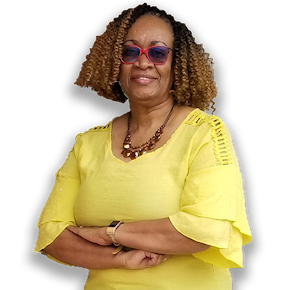

Build wealth that lasts for generations and years to come, because legacy isn’t just dollars. It’s the wisdom, values, and intentional conversations that shape how your money lives beyond you. In this episode, we unpack why mindset and emotional mastery matter, and how to make money serve your mission.
Marcella Mollon-Williams shares her L.E.G.A.C.Y. pregame framework—Legacy Lens, Emotional mastery, Generational goals, Alignment audit, Capital strategies, and Your next move—so you can start building wealth that transforms future generations, not just transfers to them.
Marcella is a Behavioral Financial Advisor™, award-winning entrepreneur, and co-host of the L.E.G.A.C.Y. Pregame Podcast. As co-founder of Legacy Builder Group, she helps first-generation six-, seven-, and eight-figure earners master the mindset and money behaviors that turn income into lasting, multi-generational wealth.
A Certified Master Mindset and Cognitive Behavioral Coach, Marcella blends financial expertise with behavioral science to equip high-income households with strategies that protect and grow their wealth while preserving their family values and mission. Featured in The Wall Street Journal, U.S. News & World Report, and NPR, she is a sought-after speaker who inspires audiences to build legacies that outlive them.
Find her here:
The L.E.G.A.C.Y. Pregame Podcast – https://www.legacypregamepodcast.com
LinkedIn – https://www.linkedin.com/in/msmwilliams
YouTube – https://www.youtube.com/@LegacyBuilderGroup
************************************
The Dr. Sev Talks Money podcast’s mission is to empower women to approach money confidently, reframe their financial habits, and build a future where their money is a tool for opportunity and security.
Through Dr. Sev Talks Money YouTube channel and Podcast, I provide actionable advice and inspiration to help you achieve financial freedom. Join me for one-on-one coaching, group sessions, workshops, or speaking engagements as we journey to financial empowerment together. It’s never too late to begin again—let’s make it happen!
Here is one way you can support the Dr. Sev Talks Money podcast and YouTube channel:
https://www.buymeacoffee.com/DrSevTalksMoney
My website: http://www.sevtalksmoney.com
YouTube: https://www.youtube.com/c/DrSeverineBryan–SevTalksMoney
LinkedIn: https://www.linkedin.com/in/severinebryan/

Transcript
Hey, hey, hey, savvy Squad. Welcome to another episode of the Dr. Sev Talks Money, YouTube, and podcast where we empower women to manage money confidently. Today we’re exploring what it really means to build a money legacy across generations. Legacy isn’t just about dollars, it’s about wisdom, values and intentional conversations that shape future impact.
My guest, Marcella Mollon-Williams is a behavioral financial advisor and entrepreneur who helps first-generation, high earners align mindset and money to create wealth that lasts for generations. Marcella, welcome to the Dr. Sev Talks Money podcast. Hello, Dr. Sev. Thank you. Thank you for having me. I’m excited to be here.
You are welcome. I am excited to have you and explore generational legacy because we want to make sure that we are leaving a legacy for our children. I like to start with something light and fun.
And this helps us to shake off the nerves and learn some fun thing about each other and ease into the episode. I like that. I like that. If your great grandchildren found a time capsule from you 100 years from now. What’s one or more non-financial thing you’d want them to discover inside?
They would have, something that has the family crest on it. They would already be familiar with our family Crest, but in a time capsule, I know there will be something on there, which the family crest is imprinted on there.
But in addition to that, I would wanna make sure that there’s some type of book or manual, , with. Just stories, about my life, even my journals something that they’ll be able to see what I’ve been through, , the struggles, what was going on internally, , how I trusted in God through the process, and something that helped them realize that no matter what they went through or what they’re going through currently, they’ve had, they have ancestors that have been through struggles that they can relate to.
Wow. That is so funny because you’re talking about journals and all of that. And that’s pretty much my answer. That’s what I would want them, I’d want them to find a journal that’s filled with my real stories, the good, the messy, and everything between. Because I want them to understand that life is not about perfection.
Yes. I really want them to know authenticity matters.
Yes. And
it’s okay to be imperfect and still. Create a beautiful life. With that journal, I’d also leave a letter that’s directly addressed to them, reminding them to lead with compassion for others and for themselves. Also I want them to know that judgment doesn’t change people, but grace, kindness.
Authenticity, understanding. Those are the things that change people. And I want them, I actually encourage them to carry that forward. So that’s what I would want to leave for my generations to come. That’s, yeah, we’re on the same page. We’re
on the same page.
Yes. Yes. Because it’s so important, right?
It’s so important for them to understand they’re not alone. Yes. And what they’re going through. Others have experienced it, and even though. That coming back from it may be different. The journey may be different. They can come back from it. , yeah, and, and so , that’s one of the reasons why I would want those kinds of messages for, to leave for my generation.
I think that if I could just add to it quickly, because I think that. So important and the fact that we’re both on the same page with that. I often refer to myself as a journey girl. I, that’s the sweet spot. I love the journey. The destination is great, but it’s just the icing on the cake.
There’s so much growth and learning. , yes. So that’s taught through the journey itself. So it’s the reason why I love biographies and, you know, documentaries and these things. Mm-hmm. ’cause when I go through these thing, when I go through everything I’m going through, including the Bible, I look back at stories what other people have gone through.
Yes. And I can think that, oh, I’m in good. I would say when I’m going through a hard time, I’m in good company.
Yes. ‘
cause people I’ve admired or people, they went through this, they got out of this, oh, this is just a thing I need to for growth. Yeah. That’s a huge part.
I think probably for both of us as far as why that leaving that journal is so important.
Yeah, it’s the diamond in the journey. It’s the, crushing , right? Yes. That create that diamond. It’s the sand pebble that creates that pearl. So yes, journey is so very important. So good. Yes. So tell our audience, , a little bit about who you are and the work that you do before we get into all the deep stuff.
Yes, yes, yes. So I always make it clear because it’s important for people to understand, I teach about identity in all of that because when we’re talking about money, so many of us lose our identity in money. And so I think it’s important to lay that foundation. So when I’m introducing myself, , because we wear so many hats and we carry so many labels, but who I am, , is.
God’s highest form of creation.
And I, I see that for all humans, we are his highest form of creation and that comes with a responsibility.
And so that’s who I am. , The labels that I carry with that are as behavioral financial advisor and the co-founder of Legacy Builder Group, which is a holistic investment and coaching firm that I founded with my brother.
It’s a family owned company, , where we, you know, work with individuals in all the areas. Specifically. Money coaching. , and it involves legacy planning, the full aspects of a legacy planning. So, with that, . You know, there’s, oh, another part of what I do, , because I love to stretch people both mentally and physically.
I’m actually a certified flexibility coach. And I, I teach a practice called the Science of Stretching and what that, that’s a physical stretching thing, but that’s a process I went through that totally transformed my mindset and made it possible for me to be the type of behavioral financial advisor that I am today.
So. Really, , stretching individuals mentally is what I love. I love growth. That’s one of my core values. And helping individuals understand that there are so many levels to us and it’s gonna take a lifetime to access who we’re actually called to be. Yes. And we should enjoy that process. And money is a tool.
For that process. It is not the goal. It’s simply a tool that we can use in order to build that up. And as you develop, then the next generation, and then the next generation, and that’s how we actually build sustainable, impactful, multi-generational wealth. It’s not with just the money, it’s not just financial assets, but it’s our intellectual assets is what we wanna preserve first and foremost.
Yes. We are human beings i’m choosing to say human. We are human beings because we’re always being, we’re always becoming, of course,
yes. I say the same thing, so,
yes. Yes. So many first generation, high earners struggle with being the first
Yeah.
In their family to build wealth.
, what are some of the unique challenges that they may face, and how can they start shifting from income to legacy?
Yes, there is a unique challenge with First Gen High in earners, which is why, you know, mark and I do focus in this niche. You know, it could range anywhere from that responsibility, , to take care to give back, which is very noble and beautiful, but it.
Comes with, it can come at a price, , a very unhealthy price, even physically. , just the stress of it all. , there are boundaries that need to be set with that. , there these expectations, , that come with that. There’s everything from self-doubt , Swiss cheese confidence. , the things in which they are, they weren’t taught.
So just the lack of confidence that comes with, operating with money and building wealth. So this the scarcity mindset that is ingrained at such an early age? Yes. So there’s a nber of, and there’re layers that come with being a first gen that’s simply not noticeable, , that most people don’t pay attention to.
And. It. It shows up. It shows up in our money habits, it shows up in our relationships. It shows up in our self-worth and how we treat ourselves. So it’s a mindset thing. That’s where it start. The money issue will always be a money issue. And until you address what’s going on in your mind, and I have clients that I take ’em through pro, various processes, but one of the things that we absolutely have to start with is.
Tapping onto their money memories, their first memory about money, which usually stems from childhood.
Yeah.
What did you see? What are the conversations you heard? What did you not hear growing up? Did you hear your parents fighting about money? Did you hear any, did you hear, you asked for money, you got yelled at.
Money doesn’t grow on trees. All of these things that, , you may hear or no one talked about Money. You don’t talk about money and all of that is deeply planted into your subconscious mind, and it shows up and it manifests through your behavior, your actions, your relationships.
And unless you take the time to do the work, that thing is gonna stick there. And you’re kinda wondering what’s with all this self-sabotage behavior? That’s how it shows up.
Yes, man, you are talking my language. Yeah, I, it starts with a money mindset. It starts with the mindset. Because if it were not the mindset, people who inherit a lot of money would still have it.
If it were just money, people who won the lotto would still have their money. Because it’s never about, oh, I, if I had more money, I would do. If I had more money, I would be, if I had more money, I would go now you have more money. What happens? You blow it because the mindset hasn’t changed. So yes,
the key, that’s the key.
And, and you know, that’s why we dedicated a podcast. So we have the podcast, a legacy pregame podcast, which is specifically dedicated, , to. Preparing. So that pregame, think of that sports analogy of , when you think of people like, you know, Serena Williams and these athletes, they go through a process before they hit the court, before they hit the field, before they hit the pool, whatever they do.
Yes. , you see them when their headphones and they’re just walking by themselves. Yes. And just the food they eat, how they filter out the noise around them and they prepare themselves. They see the visual. So they’re doing things mentally and they’re doing things. Physically to prepare themselves to get in the game.
And that’s what we want people to understand. Like you just said, we think, oh, I just need some more money and that will solve all my problems. No, no, no, no. No. Money doesn’t work that way. Money is amplifies the problem. Yes. Not prepared for it. And that’s the thing I wish people would understand more, , than they do.
Money amplifies wherever you are, whatever mindset. You are, whatever level of training you are at, money will amplify that. So you have to prepare, and that’s what the Legacy Pregame podcast is about. It’s about providing and equipping you with a framework to prepare your mindset and your mission.
Before your next money move and that mindset and mission. So the mindset and then the mission, which is your purpose, your values, everything. You know why you’re here, what you’re actually called to do, and then the money. Now has a purpose. Yeah. Because I always tell people money is a terrible master, but an excellent servant.
Yes.
We can understand how, you know, and most of us are out here just allowing money to master us. Yes. But when we can understand, okay, money. How do I want you to serve me? Because with any server, like you go to restaurant server or a servant, they need an assignment. Yes. Like I need to know how to serve you or else they’re not gonna do very, they’re not gonna do their job very well.
Yes. Yes. And so money needs to know how to serve us so that it can operate at its best. Yeah. And we are not taking the time to get clarity about how money can serve us, because most of us don’t know what we want. Period.
Yeah. Yeah. I mean, there’s a study that showed that, I can’t remember the percentage. I think it was like six to 3% or something of people who said, at the end of the month, I know I have no money left of my paycheck, but I don’t know where it went.
And that’s money being the master. Absolutely. Rather than us controlling what it, what our money does for us. And you mentioned the framework. Can you talk a little bit about that and how that could help, families start building both financial and intellectual legacies?
Yes. Yes. So we developed the Legacy pregame framework, and really legacy is a acronym. , so we break it down. L is for legacy lens. So it starts with having, clarity about what do you want your legacy to be? What does that mean? , legacy is one of those words that you, if you ask 10 d different people, what does legacy mean?
You’re gonna get 10 different answers.
Yeah.
So I define legacy as how others will experience your existence. And that can show a powerful, when you understand every room that you walk into, everywhere you show up, you are, you have an opportunity for people to experience you. When you pass away and you leave money and you leave proper instructions for that money, then you have a way for people to experience you long after you’re gone.
And then even the intellectual assets. There’s so many ways in which we people can experience our legacy as we lead it. Alive and as we leave it after we’re gone. So having a clear legacy lens is important to start. That’s the place to start. And then we go to E, which is your emotional mastery. And this is the thing that, again, it’s so, so important, we talk about this so much.
Emotional mastery is emotional intelligence. Emotional discipline. Yeah. , it’s about being able to master your emotions when you’re faced with very challenging circstances. , around money, especially around money. And I always bring up examples like death, marriage, and divorce, those four scenarios.
Our emotions are sky high and they’re usually financial decisions that need to be made, important financial decisions that need to be made. But if you could think of that, then you would see the importance of how you have to master your emotions on those extreme circstances. But we need to do it every single day.
Yeah.
And whenever our emotions, . Are in place. So that’s EG is generational goals, and it’s about setting clear goals beyond your lifestyle. So thinking a hundred, 200 years from now as you asked me about the time capsule, , what do I want my great grandchildren to experience.
From my legacy and having that and being clear on that. And then, , alignment, A is alignment audit. So this one’s making sure that your actions are in alignment with your legacy vision. So there’s no cognitive dissonance. Yes. And that’s something that we don’t pay attention to, but we live, most.
Most humans live in a constant state of cognitive dissonance. Oh, yes. You know what I’m saying? I mean, we say we believe one thing, but our actions are different. A boy are, we seen that a lot now, but
having a regular alignment audit, that’s something that’s very important, , to stay on top of. And then c that’s when we can now, and this is when we’re equipped to have to really process our capital strategies, the financial plan. And now we’re talking about money. Yeah. Now we can handle the strategies that need to be put in place to secure your wealth.
Because now you’re dealing with, see, we deal with the work first that will call self-sabotage. Yes. Yes. So we get all of that in place, so now we can move forward with important money decisions. And then, , the why the last was your next move. And this is, this takes strategic action with confidence.
This is where we. Put it all together ’cause there’s always a next step. But it’s about, okay, I made the capital strategy that’s in place now let’s move with confidence because you did all the work to get that done. So that’s our framework that we go through with our clients.
Yeah, that is so powerful and I love that you are addressing the person before you address the issue of money, because that’s outside of them.
If we can control or learn who we are and control the impulses that cause us to derail our future, then money is, is nothing because then we learn how we can master money, but we first have to master self. And I love that your program or the framework. Addresses that in that order.
Yes. Thank you. I appreciate that.
Mark and I have been doing this for over 15 years and we didn’t start this way. We did traditional financial planning and we just realized, okay, the self-sabotage kept happening. And that’s how we made that shift. And the very first thing we do, , especially if we’re working with a client who really just come to us for financial planning and , they’re not working.
On the coaching side, then at very minimum we have to have to have a values assessment with me.
And we help them develop their five, I don’t say develop, it’s already there. So it’s discover their five core values and their purpose for money, and then we can move forward with them.
Because, for both Mark and I, especially when he’s working with the financial planning part, it made a world of a difference for him to be able to help them with the money plans because now they understand, oh, this is what’s important to me. These are my core values. Yeah. And now we can keep them accountable.
Yes. For with the decisions they make. Yeah. When they go against, when they try to do something that goes against it. We’re not saying, no, you can’t do it, but, oh, what did you say your core value was?
Yeah. Okay. Yeah. Yeah. Let, let’s look at the notes. , I think you said you wanted to accomplish this.
Can we talk about how this impacts your goal and the, the goal that you set for yourself? Because it’s not me, it’s you that set that goal. So let’s talk about the thing that you’re doing, , and how is that contributing to the goal that you say you want to achieve?
Exactly. Exactly. You understand? Oh yeah. So I think a lot of times families don’t want to talk about money, they don’t want to talk about values, they don’t wanna talk about
any of those things. And those are some of the risks to building for future generations. Can you talk to that a little bit?
Absolutely. , and that’s one of the parts I love to work on, , in our, family Legacy Experience program. , ’cause we have a very specific program for individuals who are very intentional about building multi-generational wealth. And what people don’t realize is there’s a difference between generational wealth.
And what it takes to build generational wealth, meaning, okay, it got past one generation and building multi-generational wealth, , past three, four generations because that’s not the norm. And one of the key differences is family collaboration. It that is absolutely required in order to build wealth past three generations.
And a part of family collaboration is the communication piece. And it’s funny, I was just, we’re talking to my daughter who’s married and she was talking about Yeah, communication is an. Essential tool for marriage and she was talking to her husband. And, , but I, and I just happen to mention it says it’s an essential tool for every relationship.
, we can’t escape it. So being able to. Understand that, having gone through that process and I’m working with a individual or a couple who’s going through the program, a lot of times people need help in even understanding like, well, what does that even look like?
What does communicating with this type of information with my family? And one of the things that we take our clients through is, , giving them instructions to set up. Whether it’s quarterly, , monthly, annual meetings Yes. With your family, even if you have to use the family reunion and designate a time from that, those events to come together and have the real conversations.
My family, we have. Quarterly family meetings and we discuss various aspects of, , what’s there, where we are. We set up any trust, any documents, estate planning situations, , property, these type of things. And we have to get comfortable with talking about money. That’s where it starts. Yes,
yes.
None of this is gonna matter if you’re still dealing with what we talked about earlier, the money memories. , talking about money is still taboo. For you, then you’re gonna struggle. This is gonna feel impossible. So we want to move, we want to go from taboo to no taboo.
And nothing is off the floor, nothing is off topic. And that could be best when you start with, especially if you have children. Start having conversations about your, , about money. With your kids, your grandchildren, so they are comfortable. So they don’t grow up with that stigma. If you’re from the Caribbean we already know how challenging it can be.
They don’t wanna tell you where the will, they don’t wanna tell you where anything is. It’s none of your business, none of your, yes. That is a very unfortunate situation. You can be very challenging. Oh my goodness. I come across that. All the time. I’m very fortunate that, , my parents were both from Trinidad and I was born there as well, but because of what, my brother and I do, they listen to us and, I went through the process of getting their estate planning done.
The year before last, and just. About a month or so when they finished, my mother was diagnosed with a brain tumor.
Wow.
And she had to have surgery and unfortunately she never woke up from that surgery. And she was in the hospital for about a month and we eventually had to pull the plug, and that was last year.
And I saw firsthand as we went through that process and we talked as a family, we made decisions as a family and my father was able to really navigate. He had all the paperwork. To make the process easier. There were things they, they were in the middle of doing when it came, when it comes to some of the estate planning, that if he did not have the power of attorney, he wouldn’t, we wouldn’t have been able to finish that because she was not, she was in a somewhat comatose state.
So he couldn’t do anything if she’s not, if she hadn’t passed yet. Yeah. , there were just little things that I, even with what I do, I’m thinking, wow, we tend to look at life like, okay, you’re born and then you die when it comes to finances. Okay, let me make sure I have life insurance. Okay. Let me make sure you know this, that and the other.
But a lot of times we don’t think about the possibility of situations that you couldn’t even think of happening.
Yes, yes.
And we don’t prepare for that. And so it did give me an added passion to really have, , to make people aware that there’s this in-between, there’s this gray area that you have to be prepared for and that you have to make sure that you’re having the conversations.
, she just, again, before that happened, just months before. We wrote down, she didn’t wanna talk about it, but we wrote down, what do you want your funeral to look like? Yeah. , you know, they both did that. And then, so when we made the, when we had to go through that process, it was a celebration. And we were able to make decisions so easy.
No drama, everything was easy and we’re, I’m very grateful. I’m very grateful that, , that was something that my parents allowed me and my brother to guide them through without any, , without any issues behind that. And I want that for so many others.
Yeah, we, we were fortunate that we are able to do the same on our side, so with our family members.
So it, it’s always it’s such a matter of, it’s such a relief, , because you’re grieving them. Then you are trying to make decisions and we talked about, the cognitive dissonance we talked about, the elevated emotion. All of that may cause us to not make good decisions if things are not in place, because we’re in the midst of grieving, we’re making those, , you know, financial decisions.
So it is wonderful that you were able to have all of that in place. This has been such a rich conversation. And there’s so much more that we could go into. , We may have to have you come back. , so before we wrap up, do you have any last words of encouragement that you’d like to leave with our listeners?
Yes. Yes. I just want everyone to really understand that, , you are. How you show up in the world. Your legacy is alive today. , how others experience your existence can be so powerful. , it doesn’t matter if you have children. You don’t have, single, no children. You were created for a powerful purpose.
You’re not an accident. You are here intentionally. So by an intentional creator, and with that, how you operating with intention matters. Everything you say. Everything you do, yeah, everything you think matters. So allow that to be your fuel as you make decisions. All decisions, not just financial decisions, but understanding that money is a powerful tool.
To be able to amplify that intention that is in you. So work to be more intentional and in your, in the decisions that you make daily. And I promise you it will show up more powerfully each and every day that you do.
Yes, I, I totally concur. , so let’s talk about any projects that you have coming up, anything that you’d like the listeners to support you with.
Yes. I would love for your listeners to tune into my podcast, as I alluded to earlier, the Legacy Pregame podcast, and you can locate that at legacypregamepodcast.com. Again, it’s all about equipping you with a framework to master your mission and your mind before your next money move.
We’re talking about all, all the things that have to do with that. We go in deep. So, you know, I, I, I really encourage you, you, I’m all over the place. YouTube, Spotify. Apple Music. So look for Legacy, pregame podcast. Join me and, , I hope to see you there to subscribe.
Yes, thank you. And, , and where, what, what is the best place for them to connect with you and listeners, I’m going to have all of her contact information in the show notes, in the podcast, platforms, and then also in YouTube.
So if you didn’t catch it, don’t worry. We’ll have it in the shownotes. Yeah. So what is the best place for them to connect with you?
Thank you. Yes. The best place to reach me is LinkedIn. , you can find me on LinkedIn, Marcella Mollon Williams. I, that’s where I spend most of my time, although I’m all over social media, but that’s where I prefer to spend my time is in LinkedIn.
Okay. Thank you so much Marcella for, sharing with us that legacy is about more than money. It’s about the values, the wisdom we pass along. And friends, if you take one step this week, let it be this, start a conversation with someone you love about, not just what you want to leave behind.
How you want to live and lead today because wealth outliving you begins with the choices that you make right now. And everyone, please don’t forget to check out our Library of recorded podcasts and YouTube videos. Until then, this is Dr. Sev saying stay savvy and we’ll see you next time.