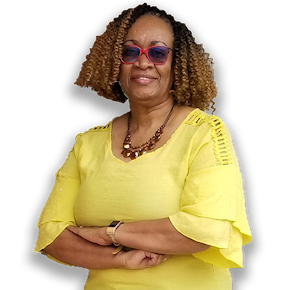

Damita Ware’s life has been defined by rebuilding.
After serving in the Air Force, raising two children as a single mom, losing her former husband, returning to nursing school at nearly 50, and launching a business at 60, she has learned that resilience is built one decision at a time.
In this episode, Damita shares the financial sacrifices, practical money strategies, and unwavering determination that carried her through every season. If you’ve ever wondered whether it’s too late to start over, this conversation will remind you that your next chapter is still waiting to be written.
****************************************************
Join Dr. Sev’s Wealth Warriors Community for more financial discussions and insights (FREE to join): https://www.skool.com/wealth-warriors-community-1025/about
****************************************************
The Dr. Sev Talks Money podcast’s mission is to empower women to approach money confidently, reframe their financial habits, and build a future where their money is a tool for opportunity and security.
Through Dr. Sev Talks Money YouTube channel and Podcast, I provide actionable advice and inspiration to help you achieve financial freedom. Join me for one-on-one coaching, group sessions, workshops, or speaking engagements as we journey to financial empowerment together. It’s never too late to begin again—let’s make it happen!
Here is one way you can support the Dr. Sev Talks Money podcast and YouTube channel:
https://www.buymeacoffee.com/DrSevTalksMoney
My website: http://www.sevtalksmoney.com
YouTube: https://www.youtube.com/c/DrSeverineBryan–SevTalksMoney
LinkedIn: https://www.linkedin.com/in/severinebryan/
****************************************************
Damita’s contact information:
IG: @ServantsWhoCare
Website: https://servantswhocare.com/
00:00 Introduction: Why It’s Never Too Late to Begin Again
02:00 Joining the Air Force to Pay for College
03:00 Building Credit After Military Service
04:00 Lessons Learned as a Hospital Volunteer
05:00 Raising Two Children on One Income
06:00 Surviving Financial Hardship as a Single Mom
08:00 Losing Her Former Husband and Starting Over
10:00 Finding Community During Difficult Seasons
11:00 Going Back to Nursing School at Nearly 50
15:00 Leaving Full-Time Employment at 60
16:00 How Investing Small Amounts Changed Everything
17:00 Starting Servants Who Care
18:00 Business Lessons Every New Entrepreneur Should Know
19:00 Military Lessons That Built Resilience
20:00 Why You Should Never Quit
21:00 Supporting Veterans and Returning Citizens
22:00 Final Thoughts: Your Story Isn’t Over

Transcript
What do you do when life keeps pulling the rug out from under you? Not once, not twice, but again and again. You could fold, or you could do what today’s guest did: rebuild, reinvent, and refuse to allow one chapter to be the final chapter.
Hey, hey, hey, Savvy Squad. Welcome to another episode of the Dr. Sav Talks Money podcast. I am your host, Dr. Sev, personal finance educator and coach, who rebuilt my credit from the 500s to 850 and paid off 39,000 in debt after a late-life divorce.
Today, we’re talking about what it really means to start over and why it is never too late to begin again.
My guest is Damita Ware, a United States Air Force veteran, nurse, and founder of Servants Who Care, where she provides supportive housing and resources for veterans, independent adults, and returning citizens transitioning back into the community.
She connects them with job skills training, mental health services, and much more. Damita, welcome to the podcast. Thank you. You are welcome. I’m excited to have you talk about this, how you rebuilt, and then also the services that you’re providing, which are so, so, so needed. So I like to start with an icebreaker, what drew you to serve in the military, and what did that chapter teach you about yourself?
Wow, that’s a great question. And again, thank you so much for having me. Well, speaking about someone starting over, I come from humble beginnings. My mom was a single parent, and so she didn’t have the resources to pay for me to go to college. I had an opportunity to go on a grant, and like other people, I blew that.
I didn’t know what I was doing, and so I ended up dropping out. I was, um, my, uh, major was pre-pharmacy at that time. So I lost my grants. I had to figure out another way to get some money to go to college because my mom nor my dad went to college, and it was something that was important to me. And so I went in the military to get the GI Bill.
And then going in the military, what that taught me was discipline, leadership, respect, you know, keeping your word. Teamwork was one of the main things. And those, uh, qualities and, non-tangibles have followed me throughout my life and throughout my career. So when you got out of the military, what did your financial picture look like, and how did you find your footing?
So when I first got out of the military, they allow you to save your vacation, and they will give you that in cash. At that time, I had about 60 days worth of vacation, and you know as well as I do, 60 days worth of income, that’s about how long it lasts is 60 days. So I had to have a plan B. And so I immediately began to work as a home health aide with Visiting Nurses Association, and starting to build my credit from there.
Yeah. So I know before we talked, you said you had a story about being a candy striper. Do you wanna share that story? Well, I began being a candy striper, volunteer in the hospital many, many years ago, before I even became a nurse. And at that time, you’re not getting paid for that. That’s all free work.
You’re not getting paid in money, so to speak, but you’re definitely getting paid in the experience, in the relationships that you build with people, and definitely the culture of being in healthcare, because it takes a, caregiver’s, a servant heart to do that. So that helped me to get to where I am today with being a nurse, because I took all that experience that I gained there, and I use it now.
Yeah. I, I love these kind of stories because they all tie back to how our resilience, how our grit, and the lessons we learn, how they can be applied to other aspects of our lives. So I’m gonna take a quick pause, and then we’ll be right back with a lot more from Damita. Hey friends, quick pause. If you’re enjoying today’s episode, the best way to support the show is to share it and leave a rating on your favorite podcast platform.
And you know it, five is our favorite number. And if you’re watching on YouTube, don’t forget to like, subscribe, and share. Thank you. Okay, so you relocated to Texas as a single mom with two young children, and at that time their father was, who was your ex-husband, was incarcerated. Walk us through how you managed financially during that season.
Oh, wow. That was tough because back then daycare was $600 a month, and I was only making $10 an hour as a head teller at a credit union here. And I remember very vividly going in asking for a raise, and she said, “Sure, we’ll take it into consideration.” And they gave me 50 cent. Trying to raise- two children paying $600 a month for childcare, it just, it was undoable.
So at that time, I started seeking other resources for different income. What was that looking like where the, there was more month than money? What, what was your head space and the budgeting like, uh, during that time?
Well, you go into a survival mode because the most important thing to me, first of all, in my life is God. God is first and foremost. He’s the foundation. But second would be my children. So any woman that’s listening to this knows that a mother lo- mother’s love is second to none. It’s like the, the love that God has for us.
So I was willing to do anything and everything that I had to do to take care of my children. I prayed a lot. I sacrificed a lot. We didn’t have cable. We didn’t have a lot of things, you know, that normal people take for granted, going out to eat. It was ramen noodles or just whatever, you know, we could…
I would go to places when they had the kids could eat free. We would do that sometimes. But yeah, it was cutting costs by any means necessary, but we did it by the grace of God. Yeah. Yeah. I, and that’s the thing, right? Is that’s where the resilience come in because you know this is where I am. I’m not gonna be here all the time, but while I’m here, what can I do to make this situation work for me?
And it may mean giving up some things temporarily in order to make the situation work for you. Because at the back of your mind, you know, “This is not going to be my life for the rest of my life.
Absolutely. And another thing that I would do is I would, like, if there were three light bulbs in a room, I would unscrew two of those light bulbs and buy like the low-watt light bulbs. Instead of 100 watt, I would buy 40 watt.
I would unplug things like microwaves or TVs that have the little light on them, because they’re constantly using electricity, and by unplugging those you save on your electric bill. So, you know, things like cutting coupons, definitely. I still cut coupons to this day. And like I said, going to places where I can eat or the kids can eat free, or even in some cases I would buy one meal, we would split the burger in half, split the burgers, or the fries, we would split the whole meal in three.
So yeah, you become very resourceful when you have to take care of yourself and two children. Yeah. I like that word, resourceful.
And what I’m hearing from you, is how you steward your resources and some of the practices you still do today, like cutting coupons so you lost, you lost your ex-husband at 39 when your kids were just starting elementary school.
How did that change your financial reality and how did you hold it together? Because grief and finances, they’re a painful combination. Very painful. Very painful. It changed my financial landscape because I had purchased my first home in Nebraska, which I had to put up for sale, and I purchased a second home in Texas, which I was planning on flipping, but then he passed away shortly after that.
So I was unable to flip the home that we were in, and so you just continue to budget, continue to manage your finances. You continue to not do all the extra things, as you had mentioned before, going out to eat. I did more cooking at home. We would rent Blockbuster videos. That was a big night for us, was going to Blockbuster and going through the aisle, picking out the candy, picking out the movie together.
We didn’t go out to movies where… Back then it wasn’t as, as expensive as it is now, but we still didn’t do it unless it was, like, a dollar movie. We would go to Blockbuster, rent the movie for $2 or $3, get some popcorn and candy, and just stay at home instead of going out to eat. So you become very aware of how much money’s going out and how much money is coming in, because with him passing away, I never got- One child support check.
So we’ve always had to depend, as long as I’ve had children, on my income only. So I’ve always had to pay attention to what’s going out and what’s coming in. Yeah. And that’s encouragement for another mommy who may have lost her spouse whether it’s through divorce, death, or, or they just left the home and decided they’re not contributing.
Um, and I hope this resonate with them to know that there’s life after all of that, and there are ways to, circumvent whatever situation you’re in. Lean on your community. If you’re part of a faith community, lean on them. Find a group of moms who are possibly going through the same thing.
You can exchange clothes. You can exchange, food stuff. You know? ‘Cause I may have gotten a donation with rice and maybe sugar, but I don’t need the sugar, so I can pass it to that other person who needs the sugar. So find those resources, find those groups, and network as much as you can to just remind yourself that you’re not alone and there are other people who care about what happens to you.
‘Cause it can feel isolating. When you are in that situation so I hope your story, encourages someone to find those resources that can help them.
So you quit your job during an economic downturn to go back to nursing school. You’re nearly 50 years old That’s a bold move, a really bold move. What was going through your mind financially?
Oh, wow, that’s a great question. Um, because again, at the forefront and foundation of anything that I do, God is my foundation. And so I’m a woman of faith. Anybody that knows me, they know that. The Bible says, “Faith without works is dead.” And so even though people heard what I said, I wanted them to see what I would do.
Mm-hmm. So being a nurse was always something that I wanted to do, but through life, the divorce, the relocation, his dying, all of those things kind of prevented me, um, from going back to nursing school. And I made a pact to myself that once they graduated from high school, that I was gonna pursue that dream, close that chapter, because it was very important to me, and it still is very important to me to not, when God takes me away from this earth, not to go with a bunch of if I could’ve, would’ve, should’ve.
I wanted to accomplish that goal. So with that being said, I prayed about it, and I knew that God was either gonna teach me how to fly or He was gonna catch me before I fall. So at that point, I made a plan in my mind. I knew that I had been saving in my 401(k). So a lot of people may not know this, but you can borrow from your 401(k) for educational expenses
so I borrowed $15,000 from my 401(k), and I volunteered. Do you want me to keep talking about that, Dr. Sev? Okay. So I, uh, borrowed $15,000 from my 401(k), and I, uh, knew that at my age it would be difficult for me to get a job as a nurse because I had never been a nurse. I had done many things in the healthcare field like candy striping, volunteering, home health aide, those kinds of things, but I had never been a nurse.
So I started volunteering at a couple of hospitals, couple local hospitals, and through volunteering at those hospitals, they would give me a free meal ticket. And with that free meal ticket, I would go and I would get it, and my son and I would split the meal. My daughter went in the Navy at that point, I think because she was afraid when I quit my job that we…
No, I don’t think. I know that’s why she did it. She didn’t tell me that, but I knew it. She went in the Navy so that she would have some income to help me, um, because they were afraid when I quit my job, we wouldn’t be able to make it because we were already, you know, struggling a little bit. Uh, I was balancing it, but it was kinda easy to see that, you know, we weren’t living the large, like the, living the life of the rich and famous.
And so anyway, with that being said, I would volunteer at the two hospitals, and I would get the free meal ticket. And again, I would maybe eat some of the fries, and then I would give my son the burger and the fries and the rest of it. And that’s how we ate for a long time. And, um Getting a little emotional thinking about it because- Oh, that’s okay.
This is a safe space. Yeah. Yeah, because, you know, when you think about what you’ll do for your children and what you’ll do to accomplish your goals, once you set your mind to something, sorry, um, once you set your mind to something, you just do whatever it takes. Yeah. No apology needed. We’ve all been there in some shape or form, and being emotional, thinking about what we’ve gone through, what we do for our kids- There’s no shame in that. So I want parents who are listening, to understand that what you’re doing in making the sacrifices for your kids, it will pay off someday. And I’m not talking from a Pollyanna-ish, uh, position, but it will, because I’ve been the single mom.
I’ve been the single mom while I was married, and I was the single mom after the divorce. So, be encouraged, whoever’s listening, that the sacrifices you’re making for your kids, will pay off. So you just made a bold move. Near 50, went back to nursing school. Now you’re 60 years old and you decide to step away from full-time employment to start your own business because now you’ve rebuilt financially, professionally, and personally multiple times.
Here comes another time. How did you set yourself up to sustain that transition? Now this one is gonna be fun to talk about because I’ve always been one to listen. When someone has walked in the walk that I wanna be in, I listen to them. So I’ve been very fortunate, to God be the glory, to have people in my life give me advice.
And so when I first started at For Credit back in, oh gosh, I think it was 2000, I had a guy come to me and tell me, “Whenever the opportunity presents itself to invest in anything, whether it’s a 401(k) or a 2% match or buy stocks, whatever it is,” he said, “whatever company you work in, do it.” He said, “I don’t care if it’s $5, put it in, and every time they offer you an annual increase, I don’t care if they give you 25 cent, put 2 cent in.
Just do something.” He said, “Put it in and leave it and forget about it.” And so that’s what I’ve done with the many jobs that I’ve had, and I’ve worked in just about every major hospital in the metroplex. So every time I would get a job, I would start putting in, even if it was just the minimum. I would say, “What programs do you have?
What can I put in? Oh, $10? I’m putting in $10.” So I would put in money in every program. So when this opportunity came up for me to come up with a business idea, I mean at first I’m think- obviously thinking about a servant because I’m a servant. I’m a child of God. I’m a veteran. I’ve served in the military.
I’m a nurse. I serve others, uh, helping them in their time of need. So Servants Who Care is the name of my company. So at that time I thought about what can I do? What finances do I have? So sure enough, I thought back to the 401(k)s, the profit sharing, the, you know, CDs, all the things that I had put in.
Now I’m not rich, you guys. That’s not what I’m saying. But I have put in money in several different places, so… And I’m 60. So I was 59 and a half so I could borrow, so I borrowed a little bit of money from a couple of those places, put it in a safe place, and prayed about it. Again, always pray about any decision before I make it.
And I turned in my two-week resignation and walked away from my full-time job. Yeah. So let, let’s look back before we move forward. What’s one thing maybe you wish you had done earlier to prepare for entrepreneurship? One thing that I wished I had done earlier, let’s see, I’m about eight months in now, and I guess if I had to do anything earlier, I would’ve researched the NAICS codes a little bit more.
Because when I had went to the state to get the name of my company and then I got my EIN, when you go online to get your EIN, which is similar to your Social Security number, it’s your tax ID number for your business, you need a NAICS number, which further describes what your business is, what product or services that you’ll be providing.
And if it’s even a little bit off, sometimes that can hinder you getting government funding and so forth. So mine was a little bit off, not by much, but if you have that number off, then there’s a few additional steps that you have to take down the road with Internal Revenue Services and so forth to get that government funding.
Okay. So somebody who’s listening right now and you are thinking that government funding is in your future as you build your business, you may wanna listen to that part real carefully- … and do some research making sure the NAICS code or the N-A-I-C-S code, um, that you’re choosing is going to properly position you to get those funding.
As we’re talking, um, something I’m noticing is that your military background has clearly shaped who you are, the discipline, the resilience, um, the ability to see beyond obstacles. So how did that experience prepare you for the work you do today and for every Rebuilding season in between?
Oh, gosh. You know, one of the things that I appreciate about just about any group that I’m associated with, my Christianity, single mom, nurse, military, is camaraderie and teamwork and structure and support. And that’s important to me still to this day, um, is the support that I get from people in, in my life.
If it’s someone that doesn’t support me or doesn’t want to see me win, that’s generally not someone that I spend a lot of time with. So support, structure, and just building upon the community that you have.
So what’s one thing you want listeners to walk away thinking or feeling, or it could be more than one, um, after this episode?
If there was one thing that I would want anyone to remember about me or my journey is, I think Dr. Sev mentioned it in the beginning, is don’t quit. If you can’t go through that door, find a window. Always have a plan B, and if at first you don’t succeed, try and try again.
I don’t wanna use someone else’s quotes with everything that I say, but important to me, the im- important thing to me is to keep going. Get up every day and know that it’s a new day. Weeping may endure for the night, but joy comes in the morning. Just because yesterday was a bad day, it does not mean tomorrow will be.
Keep going, hang in there, and most importantly, always have a good attitude. Don’t let one bad thing ruin your whole day. Yeah, I love that. Don’t let one bad thing ruin your whole day. So is there anything that you’re working on now that we can support?
Absolutely. We do take donations, clothing donations for our residents. As Dr. Sev had mentioned, we help, uh, veterans, independent adults, and returning citizens, and many of those folks have to start all over with $50 in their pocket. So if, and I am in Texas, if you have any donations, whether it be men’s clothes, shoes, business attire, because we do help them with job skills, computer training, AI, technology, because as you all know, technology is constantly changing.
And then of course, there’s always, if you would like to donate financially, you can reach out to me as well and we accept that. Any donation is accepted and appreciated, and no donation is too small. Um- Damita’s, IG, or Instagram Uh-huh And it’s Servants Who Care, so you can contact her there, Servants Who Care, and I think the website is also Servants Who Care, correct?
Yes, ma’am. Yeah, so Servants Who Care on IG, you can see more of the work she’s doing, and I’m sure she is not going to say no to donations from those who are outside of her immediate area.
So thank you again, uh, Damita, for being on the Dr. Sev Talks Money podcast, and for sharing, your story of recovery and the many things that you’ve gone through and how you were able to pivot and rebuild. Damita’s story is proof that no season of your life gets to write the final chapter.
None. Not loss, not starting over, not starting late. Every pivot made, every rebuild from scratch, makes us stronger and more grounded in our purpose. So if you’ve been sitting on a dream, a plan, or even just a fresh start because you thought the window had closed, I hope today’s conversation blew it wide open.
It is never too late to begin again. Until next time, take care of yourself and your money.