
Money is deeply emotional, and for many of us, it’s tied to fear, responsibility, and the pressure to get it right.
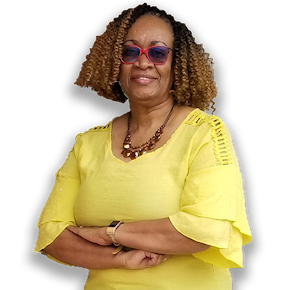
In this episode titled, Money and Freedom to Live the Life You’re Called to Live, Dr. Sev and her guest, Matt Morizio, explore what it looks like to move from managing money out of fear to using money as a tool for freedom. The conversation examines how faith, financial decisions, and real-life responsibility intersect, especially in seasons when outcomes aren’t guaranteed.
You’ll hear a thoughtful discussion about releasing the need for control, making high-probability money decisions, and learning to trust your next step even when the numbers don’t fully make sense yet. At the heart of it all is a question many of us wrestle with: how do we steward money while still trusting the life we’re called to live?
If you’ve ever felt caught between being “responsible” with money and honoring your calling, this episode offers perspective, clarity, and room to breathe.
Matt Morizio is the founder of Reconstructing Wealth and a financial advisor focused on helping people change their relationship with money.
After spending five seasons in professional baseball and experiencing an abrupt career ending, Matt navigated financial uncertainty, entrepreneurship, and seasons that required deep faith and trust. His work centers on moving from fear and scarcity to clarity and freedom—so money becomes a tool that supports life, not the thing that controls it.
📍 Connect with Matt on Instagram and get his free resources: https://www.instagram.com/mattmorizio/
************************************
The Dr. Sev Talks Money podcast’s mission is to empower women to approach money confidently, reframe their financial habits, and build a future where their money is a tool for opportunity and security.
Through Dr. Sev Talks Money YouTube channel and Podcast, I provide actionable advice and inspiration to help you achieve financial freedom. Join me for one-on-one coaching, group sessions, workshops, or speaking engagements as we journey to financial empowerment together. It’s never too late to begin again—let’s make it happen!
Here is one way you can support the Dr. Sev Talks Money podcast and YouTube channel:
https://www.buymeacoffee.com/DrSevTalksMoney
My website: http://www.sevtalksmoney.com
YouTube: https://www.youtube.com/c/DrSeverineBryan–SevTalksMoney
LinkedIn: https://www.linkedin.com/in/severinebryan/
Join our free community for women: https://www.skool.com/wealth-warriors-community-1025/about?ref=98f6434472254253b84ed49d2cce7860

Hey, hey, hey, Savvy Squad. Welcome to another episode of the Dr. Sev Talks Money, YouTube and podcast, where we empower women to manage money confidently. In today’s episode, we’re talking about what happens when money shifts from being a source of fear and pressure to becoming a tool that supports your values, your family, and your purpose. Today’s guest is Matt Morizio, founder of Reconstructing Wealth. After spending five seasons in professional baseball and experiencing an abrupt career ending, Matt navigated financial uncertainty, learning firsthand how changing his relationship with money, changed how he lives and works.
Matt. Welcome to the podcast.
Thank you Dr. Sev. Man, what an honor to be on your show. I’m excited.
Oh, I’m excited too. I know the listeners will learn a lot, because even from us just chatting, the vibe and the energy is just, really, really nice. So I know the listeners and.
And those who are watching the video will catch that.
Yeah. Awesome. So,
so I like to start off with an icebreaker.
Mm-hmm.
Make it a little light and fun. You spent five seasons as a catcher and pitcher in the minor leagues. If you had to describe your approach to money and wealth building today using a baseball analogy, what would it be?
I love it. What a fun question. I think, wow, one of my idols when I was growing up as a hitter, one of the legends of the game that I always admired was Ted Williams. And I would use him probably as this. Example of how I use my money and live my life and do my investing and everything.
Ted Williams, for those who don’t know, he’s the only baseball player to ever hit over 400 in a season since 1940 something. I don’t know the exact number. 42 maybe. Anyway, he hit 4 0 6 and nobody’s done it since. Ted Williams wrote a book called The Science of Hitting, and I read it when I was like eight years old and I was obsessed with trying to figure out how did he do that?
And in that book, and you could I’m sure, Google this and find it. He had a box of the strike zone. And the box is divided into a whole bunch of other teeny boxes, 70 something. I forget the number of boxes, but each one had a baseball in it and a corresponding batting average for when the pitch is thrown in those boxes, and he would only swing or try to swing at those high probability.
Pitches.
Mm-hmm.
And I think about investing in money in general, but really about investing in that way. In baseball, if you fail seven out of 10 times as a hitter, you’re a hall of fame hitter. You hit 300. 300 is a wonderful batting average of baseball that might get you the Hall of Fame and you failed 70% of the time of the plate.
And I love that metaphor for life because it’s so true there are so many speed bumps along the way, especially the path of money. And if you stop because you get derailed one time, you’ll never become who you’re created to be. So Ted Williams knew to a science, he knew where his highest probability of success was, which pitch.
And when I think about what do I invest in, I don’t think of like, is Bitcoin going to the moon? Is such and such stock gonna be the one that takes me and sets me free? Instead, I say, I know that some of these are gonna be duds, but what I want to do is take high probability swings at. Investments at financial decisions, whatever the situation is.
I want to take a high probability of success swing, and then I’m gonna let the chips fall. How they may let you know you could take a swing at the right pitch as Ted Williams did, and he could line out, hit a hard hit right to the center fielder and he catches it and he’s out. Technically, that’s a failure.
He did everything right. You can’t control the results, and I think as soon as I recognized that I can do the right things, financially speaking and still not have the results I want because I don’t have control after the ball leaves the bat, so to speak, after I make my decisions. I don’t have control of what a company does.
I don’t have control of what the price of a stock or what happens within whatever financial move I make. As I free frees me up when I give up that sense of control, and that’s what my whole conversation about, that’s the through line about money for me is as soon as you free up your sense of control over it and you just focus on your habits and what you can control and the future gets brighter.
Yeah, man, I love that. I love the connection that you made with thanks with baseball and your approach and his approach, right? Yep. Because that is so true. There are certain things we can control and there are certain things we can’t control. So put ourselves in the best light, give ourselves the best possibility, the best probability of hitting those runs, right?
Knowing that when you take a good swing, right, you put yourself in the highest probability of success, there’s still an overwhelming chance that it’s still not gonna go as you thought, and that’s still okay.
That’s like making the best decision you had with the best information you had at the time.
No time to beat yourself up because you didn’t know differently.
Exactly.
I’m loving this already. For listeners meeting you for the first time, tell us a little bit about who you are and what kind of work you do, and why they should listen to you.
Well, if you want to listen to me, that’s your choice.
I have eight children, well soon to be eight children at home. And, wife married for 15 years. This is, we’re on our 16th year of marriage. My oldest is gonna turn 14 in a month and a half. So we’ve been basically building a family from nearly day one of marriage really is about six months in and.
That’s first and foremost really most important to me, I suppose most important is my faith. I’m a man of faith, and then my family comes next in line. And as I think about the priorities of my life, it’s really about my faith, my family. My personal health, my fitness, and then my finances. Which is funny because I am, as you can see on the screen, if you’re watching this, if you’re not, you’re listening.
I’m a founder of a wealth management firm. My entire mission in life now, my calling in life is to help people figure out the game of money so that they can go live freely and really live into who they’re created to be. And here I am telling you that the priorities of my life, the finances is.
The fourth on, on the list of four things that I really focus on. But that’s because, there’s an old saying, I don’t wanna butcher this, but saying something like, A man in good health has a thousand wishes, but a sick man has, but one, so if you don’t work on your health. It doesn’t matter how much money you have in the bank, if you’re laying in a hospital bed, you can’t enjoy your life.
So I really think like if I don’t have my creator, if I don’t have my faith that the rest of life’s gonna go sideways. You could take all of my things from me and let me keep my family and I’m happy you take my family from me and let me keep all my things. I’m miserable. So faith, family, then my health, and then obviously the wealth that really is the engine.
That’s, a little bit about me.
Yeah. I love that. The richest man in the world when he is on his deathbed can’t do anything with the money he has.
I’ve never seen a hearse pulling a U-Haul, put it that way, right?
And even if they were to bury all the money, they can’t do anything with it anyway.
Yeah. Look at the Egyptians. Their grave just got robbed. That’s all that happened for them.
Okay. So you mentioned, your large family. I know that raising a large family, I have a small one and I know it brings financial constraints, so I can understand it probably does the same for you.
So how did working within real limitations shape the way you approach spending risk and long-term decisions?
It does. I joke, but it’s not a joke with clients and people who talk to me, I say I’m a built-in guarantee that I need to figure out how to maximize every dollar I earn because look at the size of my family.
I mean, you imagine what that food bill is. So having a large family does come with certain sacrifices. It comes with tons of blessings, but it comes with a lot of work and sacrifice too. And I think to a degree. Understanding the priorities of life and making sure you are using your money, not spending your money, but using your money to really fund those priorities.
I think that’s a healthy way to look at it. And that may mean I don’t need to go and buy that extra, whatever you name it, latte or your guilty pleasure, but. That latte might be the thing that really brings you a lot of joy to kickstart your day, in which case, maybe that is the way to use your money.
Again, it’s not about the thing, it’s about the mindset and the thought toward how does it impact the future you. like I talked about. I make decisions based off of where that, will take me, not how that’s gonna affect me today necessarily. And with a big family, there’s just a lot of sacrifice.
It’s expensive. If I want my kids to enjoy the life, I feel like I am called to steward as a parent of theirs, to bring them up and raise them well, well shoot the activities that I think are really valuable. Life lessons, like the sports and the other things, those come with a fee. Everything comes with a bill and.
I will tell you, it’s hard to tell my story without including an element of faith in it. If I didn’t feel like I am in. My, sort of God appointed role if I wasn’t in the career and the calling that I’m supposed to be in, because I’ve prayerfully taken steps to become the founder of this firm.
It was not me driving the bus. My baseball career. I was driving the bus and that bus eventually crashed 21 years later. I never made it to the big leagues. I played in the minor leagues. So theoretically, my 21 year journey. Crashed and burned. ’cause I was the bus driver and I swore I was never gonna drive that bus.
I was gonna hand over the reins, let God drive. I’ll be the passenger princess the rest of my life and I’ll be happy with it. And knowing that I perfectly stepped into this career post baseball. Through a kind of a twisted path in finance staffing, but eventually got here and now launched this thing as an entrepreneur at 40 with seven children a few years ago.
None of that makes sense on paper, but because I was prayerful about it, I will tell you that the valleys that I’ve gone through financially has made me much more empathetic advisor, but it also keeps me going because I know. This is the role I’m supposed to be in so I can endure whatever suffering I’m enduring, whatever sacrifices I’m making, because I know that there’s something for me on this path that I need to fulfill.
So that’s the way I keep going through the sacrifices and the hard times and the expenses and the negative bank balances and the max out credit cards and the depleted savings. I promise. I’ve been through all of them.
It is. So exciting to know that even with the valleys, even with the things that you’re going through now, knowing this is my purpose.
Yeah. And this is my driver because. I’m not going through this because I made the wrong decision. I’ve made the right decision but this is a temporary bump in the road. So for somebody listening, I want you to hear that message. That is this, whatever it is, is a temporary bump in the road and, keeping your eye on the goal, the calling that you’ve chosen or that was chosen for you and you know, you’re walking in it, that it is okay.
It’s painful. But it’s okay because it’s a temporary bump. I love that. Mm-hmm.
Really well said.
You’ve mentioned some of this, some mindset shifts that you’ve had to make to make this work for you. Can you add in some financial strategies that made it possible for you to take the entrepreneurial leap while supporting a large family?
Yeah, I live in the world of personal finance now. A lot of what I do, bases itself, the decision making we make with clients and for myself, bases off of what does it cost to be you today? So, like the term budget has a nasty connotation to it, but really it’s just what do you spend? I would say that if you don’t know that number, it’s a really difficult.
Second decision, whatever that decision might be. Meaning should I put away from my college, my kids’ college? Should I put more into my retirement account? Should I spend on that vacation? All of the should i’s, and does it make sense? Really hinge on, what does it cost to be you first?
And then understand what’s coming in. Most people know that number most don’t know what’s going out. If you don’t know what’s going out. That strategy number one is to shine a light. On what it costs to be you. No, don’t apply any emotion. There’s no guilt. There’s no shame, there’s not. It costs something to live your life, and if you don’t know what it costs, you need to, because then you can do the math.
It’s not difficult math. You can just understand, Hey, I make this much money. I spend this much money. If you’re spending more than you’re making, well, your first strategy is to figure out how to cut costs or. It’s the dirty little secret nobody talks about in my world because it’s hard. But it is a reality, especially in today’s world with inflation roaring and everything.
If you can’t cut costs, then you’ve got to figure out how to earn more money. And that’s the other strategy I talk a lot with people about is when you are trying to figure out how to optimize your finances or just really get yourself in a situation that feels good, like you’re heading in the right path.
You really have to look at your numbers and say, I’ve got two levers to pull. I can spend less or I can earn more. And you can use both levers in combination, but that’s it. Don’t overcomplicate your personal finances. You either have to spend less or you have to earn more. And sometimes the strategy is spend less.
A lot of the times, I’m gonna be honest with the majority of people I work with who are responsible people trying to do the right thing in this world, a lot of the strategy revolves around how do I earn more? And for me that was the entrepreneurial leap back when I played baseball. I always studied the greats.
I said, you know what? It’s common for kids to do different batting stances in Wiffle ball. Like of their favorite big leaguers. I used to do Ken Griffey and Gary Sheffield and all these people who had unique stances in swings. ’cause I would emulate them. I would study the greats. I would study the idols.
I just told you about Ted Williams, and then I would try to emulate them. Be my version of that. Well, now that I’m in business, I study the greats, I study the titans of business, the titans of investing, and I see what they do and I try to emulate what they do in my own uniquely gifted way. But here’s the thing, when I did that studying, Sev, not a single one of them, who was living a life that I admired, that I wanted to live my own version of, I didn’t wanna be them.
I just saw a lot of their life and I was like, man, I wanna do that for me, for my family, and. Not a single one of them was a W2 employee, not one. And if success leaves clues, well, I understood my numbers. I said I know where I’m trying to go to. I see that success has left clues. There’s plenty of people I’ve been studying.
I see a bandaid that needs to be ripped off here. I cannot be a W2 employee the rest of my life apparently, if I’m trying to get to that destination. So that was a big catalyst for me.
I keep saying I love that, but I really do. Because it’s knowing yourself and knowing your numbers.
Yeah. As financial, professionals, we push know your numbers, know your numbers, but. We have to add in. Know yourself too.
Yeah.
Because you knew yourself, you knew what you needed to do beyond the numbers. You knew you need to take care of your family, and so you put it all together and you’re now able to step out on faith.
And start this business. So you’ve shared also that your relationship with money shifted from fear and anxiety to clarity and abundance. What were some of the financial patterns or beliefs you had to unlearn as your responsibilities grew? ’cause we talked a little about, what we need to do, but what are some things that we need to stop doing so that we can get better, , and advance in life?
Man, I love that question. To me, belief pre predetermines the behavior, so your beliefs, your own self beliefs end up predetermining. How you’re gonna behave toward a thing. And when you talk about money, the first step is just having an awareness around your relationship with it. And I know it feels funny and sort of like.
Pie in the sky thinking to say you have a relationship with dollars. But what I’m talking about is what emotions do you attach to people who have a lot of money to your self? When your self worth, or when you look at your bank account, how do you feel? Things like that. I have had thousands upon thousands of one-on-one conversations with people about their money, and I’m here to tell you that the overwhelming majority of us have a jacked up relationship with it.
To some degree. And we need to address that because what I’ve learned is that we adopt that. We inherit that typically from our parents, and our parents get it from their parents and their parents. Around my generation, they’re probably great depression era parents. So that’s the mindset that scarcity, worry, fear mindset is handed down.
And since society won’t let us talk about money, they discourage speaking about personal finances. You end up just catching, you know, I have seven, almost eight kids. I’ve learned firsthand as a parent. So much more is caught by my kids than taught by me. So they emulate me, they see my behaviors, they see who I am.
And guess what? That happens with money. You get handed down, you catch whatever your parents think about money. And for me it was one full of fear and worry and hoarding hoarding, not like in the sense of I’m gonna have an HGTV show about all the stuff in my front yard hoarding. It was more fear driven of like, don’t overspend, you can’t use that.
You better turn the heat down. I got yelled at more than I ever have been yelled at about not turning the heat down than any grade or anything I did in the neighborhood. That was a problem. Not turning the heat down was a cardinal sin in my life. That was an issue. So much so that I remember one time when I got home.
This will really just give you an example of where I’m coming from so I can help you paint a picture toward how I’ve changed it. I remember coming home from college when I was still a kid at going to school in Boston at the time, and my mother was in my childhood home. My parents were divorced, so the home was probably too big for her, but she still lived in it and it was heated by oil.
And if anybody lives in cold weather, states oil, heat can be expensive. So. I remember walking home it was on Christmas break, so I was coming into the house, and the door was unlocked. So I walked down this hall to get into the kitchen and I would turn right and I would go into our TV room.
Well there was a giant heavy blanket draped in this open door frame to get into the TV room. And I remember wondering all the lights were off, of course. And , I remember peeling behind the blanket thinking what is going on? And my mother’s. Watching TV in there with her down jacket and a blanket and just watching a TV show just middle of the day here.
This is like a weekend day. This was not a unique thing, a unique day. And I remember feeling noticeably warmer in that room. And effectively what was happening was she was keeping the heat in the home so low, like around 58, keeping it so low that she and, but cocooning herself in her, in that room, she was creating warmth, body heat, and just keeping the air in that room.
In an effort to conserve on the oil bill, and that is my mindset around what you need to think about whenever you are gonna use or spend in my mind, spend a dollar. So my first step was really awareness of that and having to unlearn a lot of that, that scarcity, worry, fear driven mindset can serve you to a degree.
It’ll keep you from spending on dumb things. But when it controls you, like it controlled me. I was not in control of it. It controlled me. When it controls you, it consumes your spirit and you can never live into who God made you to be, in my opinion. If you’re constantly living under this weight of worry and fear and scarcity, so you first have to get aware of that, shake that, and then you gotta go get educated on how money works.
’cause if that’s not it. Then you gotta learn how the game of money actually does work so that you can see it as a tool to be able to serve your calling. And that’s a whole different step. And I would tell you the last piece of my journey, financially, going from scarcity to abundance, the shortcut to change my mind, and my subconscious wiring that we’re talking about money was giving it away as soon as I incorporated this discipline of tithing finally for my life.
My entire subconscious rewired and effectively, I was told by some friends of mine who are PhDs in psychology, so they understand this way more than I do, but I expressed what I was feeling. I was like, do you have words for this? They said, your subconscious doesn’t understand the difference between reality and what you think, and when you’re giving money away, your subconscious is now telling itself.
Hey, we used to worry about this thing, but hey, we actually are free to give it up so we don’t have to be so fear driven around it anymore. And without me even trying or knowing my subconscious around money was being rewired, all because I freely gave it away.
Yeah, that’s such a real part of our journey that un learning.
And I loved how the psychologists, your friends, how they put that together, I’m a big tither, I’m a big believer in tithing, and I never thought of it. As rewiring that, you know, as you give it away, you’re saying this thing that you depend on and you want to protect at all costs, giving it away is telling yourself now that it’s okay to do that.
, Because there’s more where that came from. You got
it.
Hey friends, we’re doing a quick pause because I want to invite you. If you are enjoying today’s episode, the best way to support the show is to share it and leave us a rating on your favorite podcast platform, and you know it.
Five is our favorite number. Don’t forget to subscribe if you are watching us on YouTube now, back to our show.
So let’s talk a little bit about faith and how that has influenced the way you think about provision risk, and responsibility, particularly when outcomes aren’t guaranteed.
Man, isn’t that faith in a nutshell, the way you just described it, the way you asked that question? It makes me think of a Bible verse in Psalms.
I think it’s Psalms one 19, but don’t quote me on that. It might not be, but I think it is. The psalmist, he talks about the word, the Bible being, a lamp to our feet and a light on our path. When you study culturally. What they would’ve been referring to when they talk about that lamp. That lamp probably gave the light of about five or so candles worth.
We’re not talking about this spotlight or these car headlights that show miles and really can show you the end of the path. The word is a lamp to our feet and a light on our path. Really what happens is it gives you your next step. In other words. When you are in the word and you’re in prayer and you hear from God, you aren’t going to hear, Hey, this is what the next five years are gonna look like, or the next one year is gonna look like.
What you’re gonna learn is that you are gonna be instructed on your next step, and it’s gonna become clear, but that’s it. You have to take that step. Just like that person walking on a path, holding this lamp, has to take that step to be able to see what the, what the next step on the path looks like.
For me, I don’t care if it’s finances or raising a family, having another child, buying a house, all the decisions that come along with this. If they’re done prayerfully and I feel like, okay, I’m supposed to go do this, then I have to shed all of my. Human emotion around what if? Like what if it doesn’t work out? What if I feel, what if I fall outta the face? What if my family, like I ruined my family’s future? I’ve got to shed all that and say, I know I’m prayerful in this, and it’s really clear. I’m supposed to make this step. And I also don’t get to know what the step beyond that is.
That has heavily influenced. How I live my life financially and any other way, like I am now comfortable and confident and go, God has shown up enough times in my past to give me his track record of confidence. Right. That I know. It would be ridiculous for me even though the Israelites in the desert did it.
You know, they got fed food from the sky and tomorrow they thought, well, what if it doesn’t fall again? Right? Like I get it. I understand that mindset, but I have to shed all of that and say, I know that this lamp is showing my next step. I have to take that step if I’m ever gonna see what the step after that looks like.
Yeah, I can relate to that a lot because we never really know. We can make decisions. We can do things and we never know what the outcome is going to be. And we just have to have faith that we are making the decisions that we’re supposed to, guided. By our faith, guided by our connections to the creator.
Yeah. And knowing that we’re doing that and stepping out on faith and doing the thing.
Yeah. I mean, going back to the beginning of the convo where I talked about the high probability of success to me, the highest probability of success is decision number one.
Decision making criteria. Number one, I should say, where is God leading you in this? If there’s a very clear one, like number one A will say clear direction, God’s leading you. You don’t have to go and filter any more decision making. That’s your step, and that’s the highest probability of success because that’s where you’re supposed to go.
And if you aren’t clear on that, then maybe you go to one B, two three, like you start to think about all the other highest probability of success decisions. But the reality is, and this advice was given to me from an amazing mentor of mine. We were talking about should I launch this business years ago when I was thinking about it?
’cause I have seven children. I’m the sole provider. Becoming an entrepreneur post-college when I can sleep on floors and eat ramen noodles. Sure. But not when I have a home and I have a family to provide for and a lifestyle that I think they deserve. So I talked with him about it and he’s like, look.
And he’s super financially successful and otherwise his family loves him. I mean, I admire this guy a lot and he says, I’m gonna give you some advice. I’m gonna give you my thoughts, but I want you to know that, like I said, one A, this is where I got it from. He says, one A is if God is leading you to do this, then you should do it, and it doesn’t matter what else I have to say.
And he is like, with that, let’s go talk through the numbers and
period, period, period. Right? Period.
And here I am with him. Like he’s the one that’s kind of like guiding me on this entrepreneurial journey. ’cause he’s built such a big business and he gets it. And here he is and he’s given me that advice.
And I will tell you, Sev, I’ve given that advice to so many other people since I’m like, I’m gonna give you my thoughts, but before I do. Number one A is if you’re in prayer about this and you know where you’re supposed to go. You don’t need me or anybody else to tell you. You know what you’re supposed to do.
Yeah.
But if you don’t know, let’s talk through the rest.
We don’t want to be like a Gideon, right. Um, let me test it with the fleece. Oh. Let it be wet. Let it be dry. We don’t wanna be that. Just be bold and do the thing. Right.
Come on. It’s so scary too, by the way. It’s not the easy. Yes.
It is not easy.
Yes. Let’s make that clear to our listeners. Right. Really clear. It is not easy. We’re talking like, you know, oh yeah, I believe and I’m gonna do it. It is not easy. You’re doing with sweaty palms, heart palpitating.
Yeah. Got
it. All the things and you’s real, sometimes even doubting, but you’re doing it
and sometimes it gets worse first.
When I. Stepped into the world of financial advising. This was before I launched my firm a decade ago. I went on this financial tailspin because it was suddenly on me to build this practice within a business, basically get my own clients.
I worked for somebody, but they didn’t feed me anything. So it was like I had to go build up my practice, and it just went slower than I needed it to go. And I went on this terrible financial journey eventually to the point where I was. Borrowing my mom’s credit card for a few weeks ’cause I was waiting for this cash out refinance on my home just to pay off debt and the refinance hadn’t closed and I literally could not afford to feed my family and I had to borrow my mom’s credit card just to buy groceries.
And you better believe I wasn’t out lavishly spending then. And this is after I was so incredibly prayerful and I knew I was supposed to step into this. There’s tons of bumps and doubts along the way to say, God, why did you lead me here? You get emotional thinking about that because it’s such a hard season, but I need people to know that.
It doesn’t mean because you’re following his plan, it’s, it’s immediately rainbows and butterflies.
Okay? I can relate.
Anybody that’s walked that faithful walk can relate.
Yeah. So , let’s shift gears for a bit. For many of us, money is deeply emotional.
Yes.
And we talk about, you know, the money stories, our families.
So it’s all connected to that. And it represents security to provide for our families freedom to pursue our own purpose. Whatever purpose we are called to. So how can we begin to practice? Emotional detachment from money in a way that leads to a fuller life.
I love emotional detachment. To me, I’m gonna die on this crusade.
This is my crusade of what financial freedom should be defined as. I think the world defines financial freedom as. You have enough money in your bank account, in your storehouses that you’ve saved up over time and invested, and now you can use that money to fund your life. You don’t have to work anymore.
Work has become optional, which by the way, is where I’m trying to get to. We’re all trying to get there. That’s a beautiful place to go to. But I have this front row seat to so many people’s financial lives and , I guess I’ve seen too many at this point. That have by definition, financial freedom, and they worry every day about their money, especially if the market’s down.
Are they gonna be okay? They’re gripped with fear, not necessarily 24 hours a day, but it’s this little burden that sits on their shoulder like this worry that they carry throughout every day. Yet they have enough money to provide. To me, that’s not financial freedom. So financial freedom is when you can see money for what it is, which is the store of value.
Like I think whatever you’re doing for me is worth however many dollars I’m gonna pay you, and we exchange your service for my dollars and we’re all happy. That’s how you make money. You add value to somebody’s life enough so that they feel like it’s worth a certain dollar amount. Back in the day, it wasn’t dollars.
It was. Coins or gold or spices or cattle or there was something that they thought, I have something of value. You have something of value. Let’s trade because I need what you got. You need what I got, and we’ll trade. That’s how that works. That’s dollars. So I think to emotionally detach from money to get good with money.
We have to get educated on it. We have to start understanding that it’s not ours to begin with. So we gotta give up this illusion of control around money. And I tell people a lot that you are probably struggling with your money to figure out like a healthy discipline and saving and investing and all the things that my industry talks about.
Saving for your future for retirement plan delay gratification today, so the future is better. All those things you’re making about yourself, and if you start to think about the other people in your life that you can serve and provide for and the lives you can change as a result of you diligently investing and saving, doing all those things today, you are far more likely to change habits and behaviors today than you are.
If you just think about your own future becoming financially free, so you are happy, and I would equate it to this, if you had a heart problem and you had a doctor that said, Hey, you’ve got a heart problem and you gotta start eating like this, and you have to start exercising and doing these things because this heart problem might kill you one day.
That’s. Could be enough to spur motivation and get somebody to change. But if that, and I know the majority of your audience there are women, and if you’re a mom, let’s just say if you’re not, you can probably put yourself in this situation. If that same doctor to describe the same heart problem came to you and said, Hey, I got a question.
Do you want to be the one to have a first dance with your son at his wedding or do you want that to be somebody else immediately? I’m sure your emotions are like high red alert, like, what are you talking about? I’m leaning in, I’m listening. And then if they said, you’ve got this heart problem, that it would kill you.
If you don’t make a change, I promise you, you are more likely to change your lifestyle and your habits. If you understand that that’s what’s on the other side of it versus the same outcome, it’s gonna kill you early. I just described it in terms of your worth in somebody else’s eyes, and how you’re gonna be there for somebody else as opposed to making it about you.
And if you do that for your money, you’re gonna change today’s behaviors.
I love the way that you connected that to the mother’s heart, right? It’s not about money, but it’s the lifestyle or wanting to see your child graduate or something like that.
That is, now, the driver, not, I need to save a million dollars.
Right?
So if a listener were to take just one idea or two from this conversation and sat with it this week. What perspective or mindset around money do you hope stays with them?
I hope, man, first off, thank you for having me for this.
This is such a fun conversation, and if even one listener does hear this and sit with this and make a change, what A home run to use my terms, the baseball terms, what a home run this conversation would be. I think if a listener is, is hearing this and something stirring in them and they sat and said, why?
Why do I feel the way I feel about money? They got aware on it and then they took a step toward understanding that awareness and then getting educated on how it works. I think that to me. Is setting them up to be on a path of fulfillment and a successful financial path. So if they get awareness, they learn about what childhood story is, making them feel the way they feel about money, and then they commit to understanding really how money works so they can rewrite that script.
I don’t think I could quantify the impact that will have in their life. ’cause their life will change. And if they’re a parent. Their children’s life will change, and then their children will grow up with a completely different wiring and mindset around money, which will change how they view and use it, which will then impact their kids.
And it’s, like I said, unquantifiable, the generational ripple effect that this could have.
Yes. You shared a lot of wisdom with us today. A lot of, things that we can mull over. So we wanna give back to you. So, what are you currently, building or most excited about right now that listeners can support or learn from you?
My firm’s just a few years old. It’s, still a baby business in terms of wealth management. I’ve been in it longer than that, but, it’s a continuation of everything I learned in the last decade plus, but I’m building it. So if there’s something that is stirring in you and you you wanna have a future or follow-up conversation about money, then find me on Instagram.
That’s probably the easiest way. You can go to my website too, but go to Instagram. It’s just my name at Matt Morizio. It’s up on the screen. For anybody watching on YouTube, send me a DM and just say, you heard this, and we could have a conversation right there, or I’m in the midst of actually changing where I created this, where it’s hosted, but I created this three part video series on.
How money works and the mindset around money and some actual blocking and tackling around personal finances and some science behind rewiring your mindset around money. I created all this and it’s free. It’s hosted on one site that it’s actually getting taken down and moved to my own site, I will send you the link though.
If you send me a DM on Instagram, follow me, send me a dm. As soon as I have that live again, I will send you the new link and it’s free. It’ll cost you, an email address, I suppose, but it’s not gonna cost anything. And those are my two options. If you wanna have a call, let’s have a call. If you wanna link to watch more videos, I’ll send you that link for free.
But regardless, send me a DM on Instagram, follow me, and hopefully it will get you on a different trajectory.
Yeah, we’ll find, a way to link that so that you can still get the email address, Matt. Cool. Once they click on it. Within the show notes.
That’s cool.
Matt, it, it has been an absolute pleasure talking with you today and I, hope that my listeners new and old, really, take some value from what you’ve shared. And I wanna speak directly to the listener right now.
Today’s conversation is a reminder that money doesn’t have to be the source of fear or pressure in our lives. Mm-hmm. When we shift how we relate to it, money can become a tool that supports our values or responsibilities and the life we’re building, and it just takes one intentional decision at a time.
So until next time, this is Dr. Sev saying, please take care of yourself and your money.
Thank you, Dr. Sev.