
Our financial story can be rewritten at any stage of life. This episode explores how resilience, mindset, and mindfulness shape the way we handle money and life’s challenges. From learning to navigate financial independence to overcoming setbacks, we talk about what it means to bounce back stronger and build confidence through every stage of our financial journey.
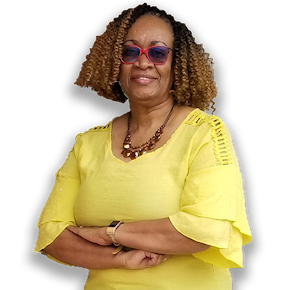
My guest is Dr. Shanae Jefferies—a sociologist, public speaker, and professor. As a first-generation college graduate and daughter of two Army veterans, she brings a unique perspective on resilience and equity. She’s also the founder of Shanae Shantel LLC, where she transforms research into real-world tools that help people and communities thrive.
Connect with her on TikTok and Instagram @awkward_phd
************************************
The Dr. Sev Talks Money podcast’s mission is to empower women to approach money confidently, reframe their financial habits, and build a future where their money is a tool for opportunity and security.
Through Dr. Sev Talks Money YouTube channel and Podcast, I provide actionable advice and inspiration to help you achieve financial freedom.
Join me for one-on-one coaching, group sessions, workshops, or speaking engagements as we journey to financial empowerment together. It’s never too late to begin again—let’s make it happen!
Here is one way you can support the Dr. Sev Talks Money podcast and YouTube channel:
https://www.buymeacoffee.com/DrSevTalksMoney
My website: http://www.sevtalksmoney.com
YouTube: https://www.youtube.com/c/DrSeverineBryan–SevTalksMoney
LinkedIn: https://www.linkedin.com/in/severinebryan/
Podcast Transcript
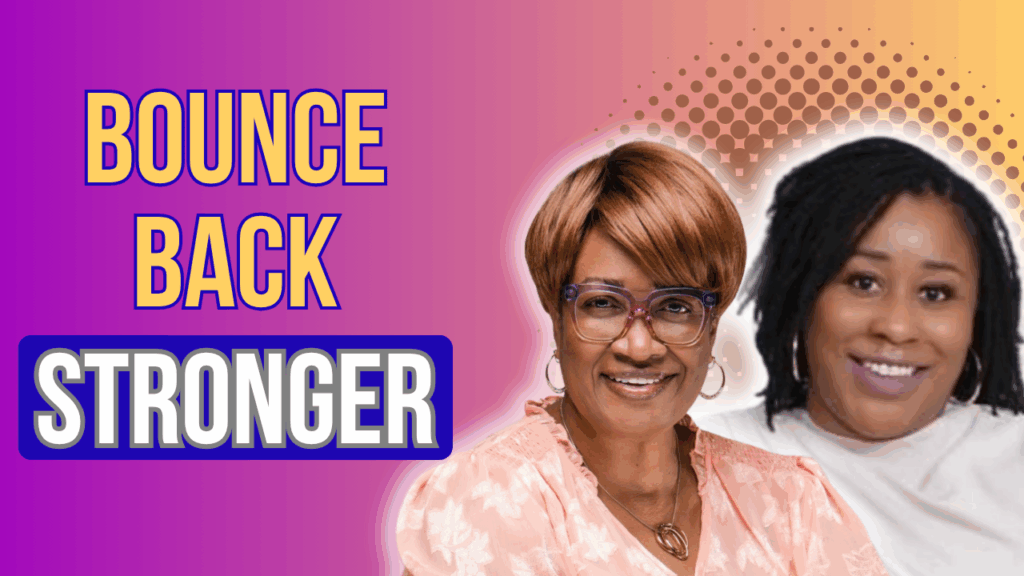
Hey, hey, hey, savvy squad. Welcome to another episode of the Dr. Sev Talks Money, YouTube and podcast, where we empower women to manage money confidently. This episode is all about bouncing back, finding strength after financial struggles, rewriting your story with resilience, and choosing a future filled with clarity and confidence.
Dr. Shanae Jeffries joins me to share how she’s turned her journey as a first generation college graduate, sociologist and entrepreneur into powerful lessons on thriving through change. Dr. Jeffries, welcome to the show. I’m excited to have you. Thank you so much. I’m so happy to be here. So before we dive into all the money talk, I like to start the conversation with something light and fun to help us ease in.
Okay, let’s do it. If your younger self could see where you are now, what do you think she’d say?
Wow. I think she’d say, wow. I’m proud of you. I think she would,
Yeah. I, I think I would say the same for myself. She would say , don’t worry so much. You’ve got it, and it’s gonna be all right.
Yeah. Yeah.
That’s encouraging. Right? It is. It’s such a reflective question, but I’m happy to say that my answer is positive and it’s not like disappointment or anything.
Yeah,
And even if we had disappointments, they still turned out okay because there were lessons that fueled us Exactly.
For, for where we are today. Exactly. Yeah. So please tell the audience a little about who you are and what you do.
Okay. Hi, I’m Dr. Shana s Jeffries. I have a brand called Shanae Shantel and I’m in the midst of launching the brand officially and my first product. I’m also a researcher. My work centers around black folk in name slash naming.
I earned my PhD from the University of North Texas, and my dissertation examined Empathy would impact support for Affirmative Action. The answer is no, other than that, I’m in the DFW area and I serve on the board of Raise Your Banner Foundation. It’s a mental health and wellness foundation.
You’re doing a lot of things. It’s always great to, to give back to our community. Now, you’ve shared that being a first generation college graduate and the daughter of two Army veterans shaped your journey.
Yes.
How did those experiences influence the resilience you’ve carried into your career and finances?
So much. So growing up, I think like everybody else, I thought we were a middle class and so, I didn’t get everything I wanted, but I did get some things I didn’t have a bad childhood when I went to St. Edwards in Austin. That was the first time that I realized, like where we were on the scale.
And also that was my first time solely relying on my own finances. So my sophomore year I was working, I got a job as a server and as a full-time student. So I was doing both of those things. And I believe I got that motivation from my parents.
Growing up, they shared that education was better. It’s better to have a white collar job than a blue collar job. They would always say having to rely on your body for money, wasn’t ideal. Use your brain. And so their determination and their ingenuity was engraved in my personality, because I grew up watching them do it, watching them be so resourceful.
So I looked for funding in undergrad, and was inducted into the McNair Scholars Program, and McNair is a program that helps underrepresented minorities get a PhD. And it hopes to put more professors into the academy. But Mc McNair helped me balance my budget, like there were financial classes too, and do the thing that I love the most.
So that’s when I discovered my love for research. And then so when I got to graduate school, it seemed like I had a whole new lesson to learn about finances and I was truly on my own. Like I could not call my parents. So. That was it. I hustled. I found a job on campus and I taught classes at a community college and worked for the university to help get me through grad school.
So for a lot of the time I had two jobs.
Yeah. That’s powerful. And of course, resilience shows up most when life throws us curve balls, right? Absolutely. It’s when you’re not prepared that you really have to test yourself.
Yes. We often talk about bouncing back from setbacks. Can you share a moment in your own journey, whether financial, academic, or entrepreneurial, where resilience made all the difference? And I know you shared a little bit, but can you go a little bit deeper?
Absolutely. So honestly, the reason that I joined the McNair Scholars program was because I needed money to survive in the summer. I had my own apartment in Austin. My parents paid the bill for that during undergrad, but they said we’re not gonna pay in the summer when you’re not a full-time student. So I needed to do something. So one day I walked into my social science class. I think it was social psych, not important, but a really great class. I walked into the class late and there was someone talking about the program, but more importantly, I heard them mention a stipend for the summer and I was like, oh, this is for me, obviously.
So. That serendipitous moment changed the whole trajectory of my life because I don’t think I would’ve been exposed to research in the same way. And then as a solopreneur, it seems like there’s always some sort of struggle, like you’re always going through some sort of change that you didn’t see coming.
And then finally in academia, I can share that affirmative action was not my first choice for research. I really wanted to break into name discrimination. But I was discouraged and I had to pick up myself and just carry on. So eventually I picked that topic to complete my degree and now that I’m a PhD on my own, I can research anything I please.
So yes, you just have to play the long game.
Yes. That’s the thing when you’re in the doctoral program, you do exactly what they say, even if you don’t agree. Because once you have that letter behind your name, you can do whatever you want. Exactly. They can’t take that away. So, yeah. Float through.
Yeah. So thank you for being so open about your journey and the resilience that you had to forge, to go through that journey. So as a sociologist, you study how systems shape people’s choices. How did your own money mindset evolve as you navigated college career and entrepreneurship?
Woo.
Okay. So that’s changed over time. I never really sat and thought about my sociological influence on finances. But when I graduated undergrad, I knew the world would open up for me. I believed that I had this new, groundbreaking knowledge because I was a sociologist. And that the world was just like there were jobs everywhere.
I, everyone would be glad to have me. That was a lie. That’s not what happened at all. I quickly learned that this wasn’t the hot commodity. I ended up getting a minimum wage job out of my bachelor’s program. And that’s when I decided to get more education because that would certainly help my chances.
Another thought is as I was finishing up graduate school, my initial desire was to be a professor, but looking at the maximum salary. For a tenured position, like the highest of the height, like full tenure, it made about 75 to maybe six figures. And I said, I can’t do that. That takes so long.
So I needed to find something else. So my first job out of academia. I made about 75k and that was, in the learning and Development department. And so that was in a higher range for sociology and very much higher for the faculty. I continued to climb and then I made it to the six figure Club, yay me.
But I still had to keep in mind the money lessons that I learned from undergrad and grad. Like those are the things that I think help set the foundation for how I manage money today.
You’ve taken those lessons and turned them into something practical .
Hey friends, quick pause. If you are enjoying today’s episode, the best way to support the show is to share it and leave us a rating on your favorite podcast platform, and you know it. Five is our favorite number. Don’t forget to subscribe. Also, if you are watching on YouTube. So Dr. Jeffries, you founded Shanae Shantel, LLC, to turn research into tools that help people thrive. How has your academic and corporate research shaped the way you personally approach financial resilience and decision making?
So, as you can probably tell, my academic background is a huge part of my decision making.
I tend to look at things critically, while trying to like still accept their truth so that I can do a comparison. One thing that I learned is that corporate research is a different beast than academic research, but you can easily do what corporate does because you’ve done harder things in academia.
And so I learned the different rules for corporate also because the feel is different. Like the politics are different than academia and the way that the hierarchy is. And so I weave those together and I think I’m the better for it, academia and both corporate, so
I can approach situations with several perspectives and discern the outcome, that works for the best. I think that the discernment is truly a gift.
I love how you connect research to real life and one of the tools that you mentioned before stood out to me. You created a card game.
Designed to reduce anxiety and spark conversation. What role does mindfulness or simply slowing down play in building resilience with money and life choices?
A lot. So mindfulness is a very big deal and it’s something that honestly I didn’t know about until maybe last year. I was talking to my therapist and she was like, you need to practice mindfulness.
And I was like, girl. What is that? So, a very, very big deal in getting you out of your head and out of your, thoughts of anxiety and stress and being able to fully enjoy the moment. And so I created this card game because as a society after COVID,
we’re having different levels of conversation, than we were before because the social interaction is much different. We’re talking to people differently and our society is still coming back together. So some of these things are a bit awkward. I always hated small talk and it seemed that after the pandemic, we as a society lost a lot of our social skills. And so I created this game as a remedy to help. It sparks conversation with just about anyone and you’re able to , keep the conversation going, especially because it sparks memories for you to be able to share.
And so there are questions that lead to deeper conversations. Another thing to note is that millennials and Gen Z are recorded to have the highest levels of anxiety and depression, than other groups. Like other generational groups, the uncertainty of our society can do damage to our bodies.
So some people are tormented in their heads like me, with anxiety about this, and this card game is here for a reprieve. So it can be played in a social setting or you can play it individually.
I couldn’t agree more about the change in the way we communicate during and after COVID.
The break in, how we communicate has caused a lot of us to be more isolated. COVID has done a lot more damage than. We think, and I think the repercussions are rippling out. Yes.
Further and further. And we are recognizing them now and I mean like the kids who didn’t get a chance to graduate with their peers, who didn’t get to socialize, who didn’t to do all those things, they are now becoming the adults and a lot of them are not able to handle a regular conversation.
Absolutely.
So before we wrap up, do you have any last words of encouragement you’d like to leave with our listeners? I’m sure that I do
So, everybody’s journey looks different. Sometimes we learn lessons by example, and other times we have to burn our hand to understand that the stove is in fact hot.
So. Keep on your own journey, how you understand money can evolve, and it will evolve. And that’s okay. You make some mistakes by burning your hand, and you can recover. So a couple things to remember on your journey is, one, protect your credit score. And one of the easiest ways to do that is to make sure that you set a reminder so that you pay them on time because it’s the biggest part of your credit score.
And be careful with cards because they will increase your limit and it may be a trap. This is something that I learned from touching the stove. And then finally choose you. This is just, this is a thing I do, but I think it’s a thing that we should all do. Whenever I buy something, I make sure that it’s exactly what I want.
It doesn’t make sense to spend my money on something that I hate. I could have just saved it. So get what you want if you’re going to spend the money.
That’s a good point. Right. Sometimes we do things on impulse and then afterward we’re like, oh, why did I do that? I didn’t really mean to do that.
I didn’t want to do that. So really give thought to what it is I want and even walk away. If you have the opportunity, walk away and think about it. Yeah. Before coming back to make that purchase, especially if it’s a major purchase and something that will impact your credit.
So where can people connect with you?
Please follow me on TikTok and Instagram at Awkward underscore PhD. I’m building both channels, so please follow and then I’ll post my updates through these mediums, like where you can find the card.
Yeah, and I will definitely have those, things in the show notes so you can follow, Dr. Shanae and find out what’s going on with the card deck and how you can get access to it . Thank you so much for joining us today, Dr. Shanae. It has been a pleasure and, definitely wanna know more about those card games, and I really hope that people who are listening understand the impact.
The importance of these kinds of things that can help us connect with each other. We are social beings and it helps that we connect with each other. I am an introvert naturally. But I have done a lot of work to make myself more extroverted and so for me, communication is hard. Connecting is hard, and if this card game will help us do that, then I am all for it.
So thank you again, so appreciate that. Thank you. Yes. And everyone, as you are listening, please share this episode, with someone who could use the wisdom that Dr. Shanae has shared. And until next time, this is Dr. Sev saying so long. See you at the next episode.