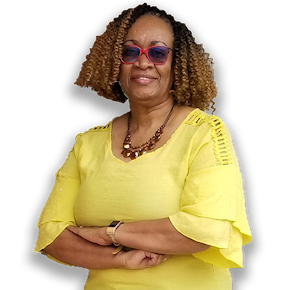

Faith and financial strategy for women over 40. The power of faith, fresh starts, and financial strategy takes center stage in this episode of Dr. Sev Talks Money. Together, my guest, Denise Sarkor, and I dive into bold moves, second chances, and building lasting legacies, especially for women 40 and over.
We cover:✨ How faith influences financial decisions and career pivots✨ Why entrepreneurship is a powerful wealth-building tool for women and marginalized communities✨ The quiet mindset blocks that keep us stuck—even when the resources are available✨ What legacy really means when you’re starting later in life✨ Why community, collaboration, and clarity are essential for lasting wealth
My guest, Denise Sarkor, is the Principal & Private Wealth Advisor at Sarkor Financial Advisors, a fee-only financial planning and investment firm. With over 20 years of experience across financial services, business strategy, and human development, she advises community leaders, executives, and small business owners on building personalized financial plans, portfolios, estates, and philanthropic strategies.
In addition to leading her firm, Denise serves as Lead Business Acquisition Advisor for the New Majority Capital Foundation and as a Business Growth Advisor with the Goldman Sachs 10,000 Small Businesses program in collaboration with Babson College. Her career includes roles at Goldman Sachs, the World Bank, Merrill Lynch, and BNY Mellon Wealth Management.
A graduate of the Wharton School and Columbia University, Denise holds multiple certifications, including CEPA®, CAP®, and Advisor For Women™, and is deeply committed to helping underestimated communities build lasting financial legacies.
Learn more: www.denisesarkor.com | sarkorfinancialadvisors.com
Disclaimer: No direct financial advice is provided in this episode. Sarkor Financial Advisors LLC (“Sarkor Financial”) is a registered investment advisor offering advisory services in the State of Georgia, the State of New Jersey, and other jurisdictions where exempt nationwide. Registration does not imply a certain level of skill or training.
************************************
The Dr. Sev Talks Money podcast’s mission is to empower women to approach money confidently, reframe their financial habits, and build a future where their money is a tool for opportunity and security.
Through Dr. Sev Talks Money YouTube channel and Podcast, I provide actionable advice and inspiration to help you achieve financial freedom. Join me for one-on-one coaching, group sessions, workshops, or speaking engagements as we journey to financial empowerment together. It’s never too late to begin again—let’s make it happen!
Here is one way you can support the Dr. Sev Talks Money podcast and YouTube channel:
https://www.buymeacoffee.com/DrSevTalksMoney
My website: http://www.sevtalksmoney.com
YouTube: https://www.youtube.com/c/DrSeverineBryan–SevTalksMoney
LinkedIn: https://www.linkedin.com/in/severinebryan/
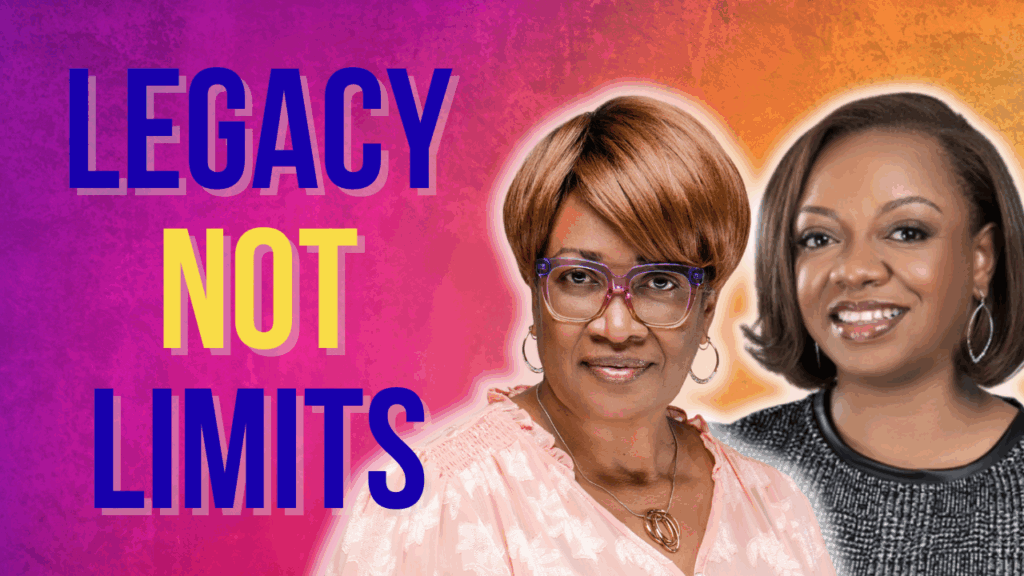
Hey, hey, hey, Savvy Squad. Welcome to another episode of the Dr. Sev Talks Money, YouTube and podcast, where we empower women to manage money confidently. Today we’re talking about bold moves, second chances, and building lasting legacies. My guest, Denise Sarkor, is a principal and private wealth advisor at Sarkor Financial Advisors, where she helps trailblazing women executives, and business owners create personalized financial strategies that build wealth and lasting legacy.
Denise, welcome to the Dr. Sev Talks Money podcast. Thank you for having me, Dr. Sev. You are welcome. I always say money can be a touchy subject and people can get uptight about it. So I start my podcast off with an icebreaker. What’s the first big thing you remember buying with your own money and do you think it was still worth it? That’s such a great question. So what comes to mind is the first album that I bought for myself, was the Miseducation, of Lauren Hill. And, I took the wrapper off and I listened to it. I sat in front of the, the CD player and played it all the way to the end. It was great. So it sounds like it was worth it. Definitely. So can you start off by telling us a little bit about yourself and the work that you do?
I’d be honored to. So my name is Denise Sarkor. I, was born in Liberia, West Africa. I came to the US when I was five, and from a very young age, started asking questions around. How could it possibly be that, one of the most resource rich countries in the world is also one of the poorest countries in the world? And that inspired me on a journey where today I have a master’s in international finance and econ policy. I’ve been an investment banker. Both within the US and abroad for the World Bank. And, today I, am the owner and operator of my own, registered investment advisory firm, called Sarkor Financial Advisors.
From international investment banking to empowering women and small business owners, what inspired your shift towards focusing on helping women 40 plus build wealth and legacy?
I do believe that we attract who we are and I happen to be close to that age range. And, my friend circle, I think has benefited a lot from, and I’m very happy about that, my family and my friend circle, and really introducing a lot of these concepts around how to build good habits around wealth and how to plan, for both, , upcoming goals, but also, larger goals such as retirement.
I think. Really focusing on the people that are reflected back to me on a daily basis and making sure that the family is strong and taken care of, and then allowing that love and that care and that service to really ripple out to the people closest to me.
Yeah, that sounds so great. And rooted in service, right?
Yes. You wear many hats including lead business acquisition advisor with new Majority Capital Foundation and business growth advisor with Goldman Sach, 10,000 small businesses. How do these roles allow you to contribute to entrepreneurship and economic growth?
I thank you for asking me that question. It’s been a pretty interesting journey where I do believe that I have been prepared in parallel to do the work that I do now.
And what I mean by that is. I’ve always, for the last 10 years, run my own practice outside of work and also had a day job. So, whether I was, an investment banker, and starting to think about entrepreneurship, to, working in sales at some point, at IBM and learning that skillset.
Having my coaching practice on the side. So I’ve been this collector of skills over the years, and eventually I drew this Venn diagram. I said, okay, how can I. The entrepreneur that I am since I was, there’s stories as a little girl having my own businesses doing hair and selling friendship bracelets.
So I’ve been an entrepreneur and a, strategist for a very long time, solving problems for people, and. I kind of took all the different experiences that I have gathered over, my lifetimes thus far. Drew this Venn diagram and realized that at the intersection of entrepreneurship, finance, and, just love for innovation and service, all of those things, that wealth management would be a very interesting path for me.
Where I could relate it to my initial response impact the people that are closest to me. And, I started out coaching individuals on the side, did that for 10 years, did a lot of work, helping people start up companies and grow companies. And that work allowed me to, be recommended for the position of, now lead business acquisition advisor with new majority capital.
And in that role, I not only train their business advisors, but I also serve cohorts of fellows who are being educated on the process of acquiring small businesses. And so, . I really enjoy helping people develop as entrepreneurs, not just start businesses and grow them, but look for growth opportunities.
And one of those paths to grow is to acquire, an existing successful small business. I love that work. And on a daily basis, I get to talk to different entrepreneurs and I’ve witnessed several of them. . You know, with the program so far we’ve had over 33 acquisitions, and so just being a part of that and watching.
Everyday professionals who are ready for that shot at ownership actually acquire businesses and accumulate more wealth in their own personal portfolios has been super fulfilling. And then, with Goldman, my focus there is as a business growth advisor, and I help my assigned scholars in that program, 10 KSB or 10,000 small businesses, , in thinking through, okay, I already have this successful business, how can.
I scale it further. And so, you know, I believe that small businesses are the engine for any economy. And so just being a part of that and knowing that we’re helping other owners, or I’m helping other owners, create jobs and sustain those jobs. And it’s those jobs that allow people to pay their rent and build their own personal wealth and then even think about creating legacy for their own families.
So.
Yeah. It was when I did my doctoral study that I realized how much small businesses drive the engine of this country in terms of businesses. You see it, but you don’t realize the depth and breadth of how much impact small businesses have on the economy.
So, I am glad that you are doing the work to help us small business owners, get our feet, on firm foundation and grow our businesses. So it seems like you have had the entrepreneurial bug for a very long time. So why do you think entrepreneurship is such a powerful tool for wealth building, especially for women and marginalized communities?
So I absolutely love this question because, for me, entrepreneurship is a very powerful tool for wealth building. Not just because, you have something called equity when you actually own either a piece or the whole pie, related to an entity that you started or acquired.
And the financial implications of that, right? Increased cash flow and ability. To not only save more, but to invest more. So there’s, technically all the things that we can achieve, not to mention the tax benefits that can come from actually owning a business in the US and how you’re rewarded by this system, right?
So there’s, that’s if you just look at entrepreneurship and business, when you look at the individuals too, the skill that is built in you, through. Starting a company or growing a company or acquiring a company or exiting from a company, you have to develop in so many ways. Yeah, your leadership skills improve.
You become more strategic in your thinking. You become a better problem solver. You become able to make, decisions faster on your feet. And what I’ve seen over time is. You know, not that you can’t get these skills in corporate roles, but most times folks don’t develop a lot of that toolkit unless they rise higher up in the ranks.
Right. Or maybe if they had, if they’ve had multiple pro promotions, they might finally get an executive coach to help them with their, with their mindset or their habits or things of that sort. But when you start your own business. You are thrown in the fire very quickly. Yes. And the scorecard is going to be those financial statements.
So your performance is gonna show, the first moment of day one, are you generating revenue? Is it cashflow positive? Is it profitable? Do you have positive equity? And can you do that on a sustainable basis. And is there a quality to the earnings that you’re making, right? So it, when you step into that realm of entrepreneurship, you improve, right?
Yes. You improve your ability to lead people, your ability to connect with people. All of that improves. The other piece of your question is, why is that so important for women and marginalized, communities? Well, there’s so many systemic factors that have limited women. When you think of things like, earning less on the dollar, in the workplace, right?
So you’ve got the wage gap, you’ve got biases, based on gender, you’ve got, sort of natural factors. Like if you have to step away from work to, bear a child, does that affect your income or not? Or things that I see with, my female clients versus my male clients, for example.
Most of my clients are women, but I do serve a few brave men. But for example, women may have to think, don’t have to, but may have to think about things like egg freezing that have a sometimes $10, $12,000 or higher bill or IVF at 20 K. And if your company isn’t conscious of those things.
That falls on you or some of the other challenges that women face around caregiving. Most women end up being the caregiver. Many women end up, taking care of their kids sometimes as single mothers, right? And so all of these things have. Financial impacts on women and both the ability to generate income at higher levels, and disruptions or emergencies that may chip away at savings more frequently.
And so if a woman has that entrepreneurial capacity, she may over time develop ways to make money. Irrespective of the government having a lot of layoffs or, yeah. And we’re seeing that and impacting over 300,000, black women because so many black women are in government service positions or have been Right.
And so just way it gives you a skillset that allows you to. Be dropped almost anywhere. And yes, to thicken your resources, your resourcefulness at a level necessary to not only survive, but in time with community, with support, with not going it alone, but really tapping into your networks, potentially the ability to thrive again.
I so agree. With that assessment, of the resourcefulness of women especially and women in marginalized communities. So let’s talk about your own entrepreneurial journey. What inspired you to launch Sarkor Financial and what were some of the earliest challenges that you faced that someone facing them may get some, insights from your experience to, to face their challenges.
Thank you for that question. So, Dr. Sev, I was inspired to do this in full transparency because I saw that it could be done. I think representation is super powerful.
Yes, there are some beautiful and gifted. And highly intelligent black women like yourself who Have been in this space of financial services and have been serving the community and serving the community well.
And so seeing it has had a profound impact on me. I think. One of the other things that inspired me goes back to your initial question of like, why women in their forties. I saw too many women in my generation struggling, highly educated. Maybe they had, student loans. Maybe they were, affected by the furloughs.
Maybe they’re not being paid as much for all the intelligence and brilliance that they’re bringing on their jobs, right? And having those struggles, trying to start families and raise families, and how can you possibly build wealth and sometimes the anxiety around feeling left behind right?
Or off track somehow towards your retirement goals. And so, I was very much inspired. By not only my desire to succeed in my own life, but also I get a huge kick outta watching my friends and my clients succeed in life. I love being, in fact, I am skilled and trained as a coach, and I bring that lens to my technical financial background and my financial planning work, but I get a kick outta watching the underdog win.
And so part of the inspiration was not only seeing other women of color do this work, but it was also mentors. And, I’ve got some reviews, for example, on my LinkedIn by people who have managed me in the past or worked alongside me that saw that I had a gift for this work.
That I saw people for who they were and that I wanted to serve the whole person. And, and that my definition of wealth has completely evolved, to not just be about money, but I want my clients healthy and healthy relationships, and I want them to be well off too. So. I’m just, I’ll say inspired because I didn’t see enough people serving especially high, executive women, women business owners.
High performing women who need teams of support around them. Now they have graduated to the level where they need CPAs and they need, CFPs and they need private wealth advisors and they need, financial counselors where, wherever they are on that spectr some of them may even need a financial coach.
Wherever they are on that spectr of support, because all those titles do different things, or pieces of the same things. And then some other things. I wanted them to have access to an advisor like myself that can one minute talk to them about M&A transactions, if they’re interested in that.
And the other minute talk to them about, the divorce that they’re going through, or, a newborn baby or the loss of a child, I can sit in that with my clients and support them, and I will support them with a lot of empathy. Empathy and concern. So that’s really what inspired me to get into this work.
Yeah, and I can hear your passion for the work, so I’m sure that your clients, appreciate the empathy and the passion and the integrity that you bring to the work that you do for them. So faith is clearly central to your journey from what we shared before. How has your faith influenced the decisions that you’ve made in business and in life?
So I think that there was a time, especially in my. Early teens and twenties where I really felt, I, I think it was that naivete of that time that I felt like I was in control of everything. And, I experienced a lot of wins at that time in my life. And then I remember when I experienced the first few losses, after trying really hard at something and realizing that.
There are certain things that are beyond my control or many things, and that I couldn’t bear a lot of those burdens, by myself, and neither should I want to. It wasn’t good for my mental health, for my physical health for anything else, right? And so. I tapped into that upbringing, my mother, making sure my brothers and I went to church when we were younger and instilling that initial faith into us.
Now my adulthood, I get to practice that praying before making bigger decisions or just waiting to hear the right. But it to get closer to the will, that I think that there is for my life. Right. So, that has shaped a whole lot and I realized I didn’t answer one of the questions you asked me before, which was, what are some of the challenges that I have faced?
There have been, what I’ll say is there have been a lot of challenges around everything from access to capital. We all know that, women, particularly women of color, are underfunded. This, despite, I think it’s like less than 2% of venture capital funding despite, being, the group that is founding the most businesses, right?
And so access to capital, sometimes. Overcoming my own limiting beliefs because, back to faith, maybe not seeing myself in that particular moment, in the image and likeness, that I believe God has created each of us in. And so I think overcoming certain mindsets, breaking through, bad habits to form better habits, taking the leap of faith in certain regards.
You know, giving yourself permission to fail and iterate yes. Whatever product or service or whatever you’re doing. So I think once, I started to hit a lot of those roadblocks, my faith, my practice of my faith, was and continues to be super helpful. And I’ll tell you, Dr. Sev, this is year two.
Of running Sarkor Financial. My coaching practice I had over 10 years. All of that was training ground for now. And when I tell you where God brought me from to where I am now, I can’t even believe it myself. And I know that that work is continuing. and so for me, entrepreneurship is one of the biggest faith walks anybody could take because you are stepping into so many unknowns and having a strong practice of your faith can really help you, excel.
Yeah. Which leads me right to my next question when it comes to building a financial legacy, especially for those starting later in life, ’cause we’ve formed our mindset, we’ve formed our habits, what are some key steps that you can encourage women to prioritize so they can get over that fear of starting later in life.
I think spending time alone with yourself. Yeah. Whether it’s prayer, combination of prayer, meditation, and just really. Being honest with yourself
Yes. Is very, very powerful. And I think that alone could start to shift a lot of things for a lot of people.
Awareness of your mindset is a very powerful thing. So I’ll give you an example. there’s an exercise I do with my clients around their money mindset. And I’ll never forget interacting with a particular client who, we go through the exercise and I ask her. Are those your beliefs you mentioned a story about your mom in a certain way.
Were those her beliefs or are they yours and Doctor Sev the tears came pouring out like this, particular person had a certain vision for their life. They wanted to achieve certain things, but their programming. So under the hood, yes. The mindsets kept this person, and the money was in the bank. They could make the moves. It, there wasn’t much risk. It wasn’t gonna, impact their emergency savings, but they couldn’t move forward because the software in the computer was telling them that. They were not good enough or they could not do it, And so what I encourage, especially for women who have been through a whole lot and I’ve spent some time reading up and on my own healing journey, I encourage women to look into all types of support.
So I would say making sure that there is a wellness plan for you is super important because we are the most important assets on our personal balance sheets. so if we can make sure that our mindsets, are being tended to either healed, are through, the support of therapists and counselors and people actually trained to do this work.
Or even, or maybe even coached if you’ve healed, some of the wounds, if some of the wounds have healed, I mean, and you wanna move forward, maybe a coach can support you in actually taking action and getting some momentum . But the moments of stillness will give you a lot of information as to why you are where you are in this moment, and creating some sort of a plan with support if necessary, can hopefully help you break through some of those things.
It’s funny because I just completed another podcast, and this was the general gist part of our conversation about really knowing yourself. If you listen to so many voices, you end up doing things and, creating things that really, that’s not even what you want because you don’t know what you want because the voices are telling you who you are and what it is that you need to do. So that is very key. As Denise said take that time to as much as you can. I know some of us are single moms or some of us are, married with families. Whatever time you can take to steal away and give yourself the gift off silence to really listen to what is it that you want and to explore that, I promise you and I’m sure Denise will agree with me that it will make a difference.
And Dr. Sev, may I add one more thing to that? Earlier I talked about, you know, I was reflecting on how we come into the world dependent and hopefully we can get to a healthy state of independence, then become more interdependent.
I am a believer that true wealth happens as a team sport, true wealth building occurs as a team building sport, right? Maybe the unit becomes the family unit through marriage and children. Maybe it becomes, a group of women who are sisters buying properties together, investing together.
Maybe it’s having a deep presence in your church community and, having a place to go when you need help and having a place to go to be of service to other people. And to this concept of knowing yourself and listening to yourself and being clear on who you are. This concept of learning to let go of the need to do everything yourself.
Yeah. hyper independence is a very dangerous place or space to be in. especially in the times that we live in. And so I’d like to say to, women in, in my age group and, and even higher, to allow yourself the gift of community. yeah, I think,
I think that’s key as well. Yes. Thank you so much for that.
So as we get ready to wrap up, what final words of wisdom can you give to those who are listening, who may be navigating the season of reinvention or maybe they’re just coming into their own. What are some words of wisdom that you can give them?
I think that’s a great question. I’d like to leave them with this reminder that how we do one thing is how we do everything. And in that time of stillness, when we are learning about who we are, let us. Reflect on what we are actually doing. You may even journal and, create a list of every task you do in a day, and then ask yourself, is that aligned with your values? Is that aligned with where you’re trying to go?
And then have the courage to do something different if what you’re doing is not already working for you. and so my hope is that all of us, right from the food that we’re putting in our bodies to our habits around drinking water, our habits around getting enough sleep at night, our habits around.
Whether it’s stretching in the morning or working out, or whatever it is that helps to keep this body or this temple intact, that will also spill over into your ability to automate your savings or automate your investments and actually believe that your decisions today are gonna impact. Your not only your physical and mental and spiritual health in the future, but also your financial health or your business health score.
Whenever you do any of these programs, they talk about your, they may talk about your business health score, but the thing I wanna really emphasize here is that score in the future is a result of the tiny things that you do every day on a consistent basis.
Yes, yes. Excellence is built one habit at a time. In the small things that we do. It’s not the big things. It’s the little things. Yes. That gets us to that place of excellence. Thank you so much, Denise for joining us, and I’d like you to share where they can find you to learn more about you, more about the work that you are doing and even if they’re wanting to work with you, and see all of the reviews that you’ve gotten and the testimonials of the people who’ve worked with you and know that. You are someone who can help them, you know, get to the place that they wanna get to, whether it’s in their finances, in developing that mindset, of I can do this.
There are barriers, yes, but the barriers will not stop me because I can hire someone like Denise to help me see how to step over the barriers and how to get around the barriers. so, please share with us where they can find you.
Yes, yes. the best way to reach me is at my website.
So if you go to Denise Sarkor.com, D-E-N-I-S-E-S-A-R-K-O-R.com, you’ll find everything about Sarkor Financial Advisors there, social media links, and a contact us page where you can reach out to me directly.
Okay. Thank you so much, Denise for, sharing your inspiring story and insights that realizing our dreams is always possible.
And friends, if today’s conversation resonated with you, don’t keep it to yourself. Share this episode with a friend, with a family member, with someone who could use a little encouragement on their own journey. And as we wrap up, please remember to subscribe to the podcast on YouTube. If you listen on Apple Podcasts, leave a review and a rating.
If you listen on Spotify, leave a rating, and as you’re completing your ratings, just remember that we love the number five. Until then, this is Dr. Sev saying, stay savvy, and we’ll see you next time. Thank you, Dr. Sev.