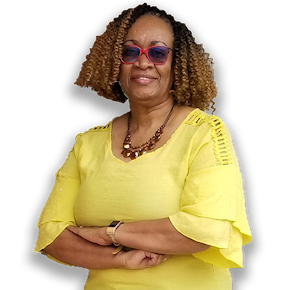

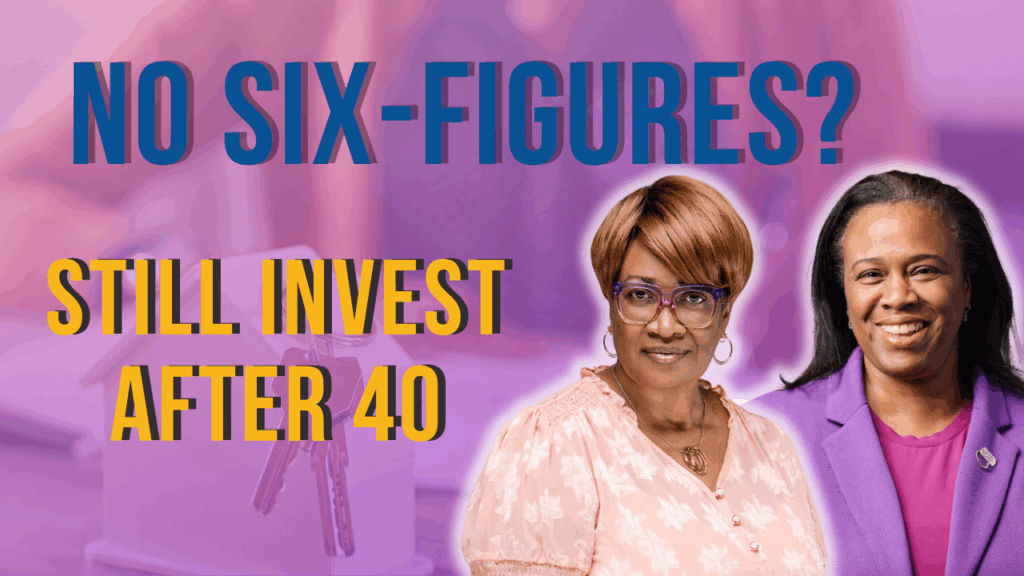
In this episode of Dr. Sev Talks Money, I’m joined by Ty Mangum to explore real estate investing after 40 without a six-figure bank account. Ty shares how she started her real estate journey later in life, built wealth without financial privilege, and now mentors women to do the same.
We talk mindset, money, and why it’s never too late to invest. Whether you’re interested in rental property, passive income, or just want to overcome fear and take that first step, this conversation will inspire you to get in the game.
Learn more about Ty and where you can connect with her: Ty Mangum is a career educator, Army Reserve officer, and real estate entrepreneur who proves it’s never too late to pivot or invest. After serving over three decades in the military, including more than 20 years in the Army Reserves, Ty shifted her passion for teaching into mentoring women around real estate, leadership, and entrepreneurship.
She’s the founder of Renaissance Properties of the Carolinas, a licensed realtor and investor, and the host of the Tiny Steps, Big Moves podcast, where she highlights inspiring career pivots. Through her platform Coach Ty Inspires, she’s helping women reimagine their next chapter and live their Best Life 2.0.
Website: https://coachtyinspires.com/
************************************
The Dr. Sev Talks Money podcast’s mission is to empower women to approach money confidently, reframe their financial habits, and build a future where their money is a tool for opportunity and security. Through Dr. Sev Talks Money YouTube channel and Podcast, I provide actionable advice and inspiration to help you achieve financial freedom. Join me for one-on-one coaching, group sessions, workshops, or speaking engagements as we journey to financial empowerment together. It’s never too late to begin again—let’s make it happen!
Here is one way you can support the Dr. Sev Talks Money podcast and YouTube channel:
https://www.buymeacoffee.com/DrSevTalksMoney
My website: http://www.sevtalksmoney.com
YouTube: https://www.youtube.com/c/DrSeverineBryan–SevTalksMoney
LinkedIn: https://www.linkedin.com/in/severinebryan/
Podcast transcript
Well, I tell people to educate yourself first. You really, really need to read up and read as many books as you can, listen to as many things you can. Now. At the time when I was doing it, podcasting wasn’t all that was obviously known, but you didn’t have as much access as you have now. I say read for understanding and then create kind of an action plan as As it relates to that. I think the whole six figure thing has somewhat been debunked in kind of what we have access to now. But I tell people that you don’t need six figures to start, but you do need, you do need one of the big three.
Either you have knowledge, time or money. Which one of those do you have? Do you have knowledge? Meaning you read up enough and you was like, okay, I can, I can. I have knowledge. I have. If you don’t have knowledge, do you have time? And if you don’t have time, do you have a little bit put aside to kind of help in your journey? And then once you’ve done that, then it’s kind of like go time from there. But yeah, that’s what I would say. Have one of the big three and then just go from there.
Yeah, I love that. Knowledge, time, money. Yeah. And, and that, that I think works not even just in real estate. It works across all spectrum of life.
Hey, hey, hey, savvy squad. Welcome to another episode of the Dr. Sev Talks Money, YouTube and podcast, where we empower women to manage money confidently. Ever thought owning property was out of reach without a six figure bank account? In this episode, we’re sitting down with Ty Mangum, who started building wealth through real estate later in life, without a trust fund or a fancy financial background. Ty is a career educator, army reserve officer, and real estate entrepreneur who proves it’s never too late to pivot or invest. Her journey shows that it’s not about having a huge head start. It’s about taking bold, strategic steps towards your goal, no matter when you begin. Ty, welcome to the Dr. Sev Talks Money podcast.
Well, thank you, Dr. Sev. Thanks for having me.
You are welcome. So I’m always fascinated by real estate investing because I follow quite a number of gurus, I do a little bit of pseudo investing. We can talk about that later. Okay, so before we dive into the meat of the podcast, I like to kick it off with a little bit of an icebreaker because it kind of loosens up the atmosphere. Okay, so my tiebreaker for you is what’s one money decision you made in your 20s or 30s that makes you either laugh or cringe now?
Ooh, that’s a good one. I would say renting an apartment on my own before I was ready to. So, you know, trying to follow what everyone else was doing and got an apartment on my own. And you really should have stayed at home a little longer and you had the option to stay home where everybody doesn’t have that luxury. I probably should have stayed home a little longer just to figure it out, but, you know, you get bruised along the way, but it helps you, right? My dad says it builds character. Right? Yeah.
Yeah. And that’s what I’m trying to tell my daughter. Actually. It’s funny because I just had a conversation with her downstairs. She’s off on Mondays and Tuesdays. She’s still in school her last semester.
And I’m, you know, I’m just having a conversation. Hey, you’re working a nice job, even though it’s not your forever job. You’re making nice money. Save your money. You have it easy. You don’t have to pay bills here. Yes, I do require you to pay a couple bills because I want you to learn how to manage your money.
But nothing that is going to break you and you need to not waste your money because you have it so easy. And I remind her of the other kids who were put out of the house at 18. So yes, I can, I, I, I can understand where you’re coming from because so much money you could save if you stay home and kind of build that nest egg before moving out.
Absolutely, if you have the luxury.
Yes.
I don’t think we get that until a little later in life. But if you have the luxury, I say stay home, you know, respect the house rules. So even as an adult, I think that might have been my push to get me out. Right. It’s just like, okay. And then you like, oh, you know, maybe those rules weren’t that bad considering what I was going to be saving, you know?
Yeah, yeah. So, yeah, yeah, I totally get it. When we’re at certain age, we think, listen, I’m grown, I, I’m gonna do my own thing. Not thinking of the consequences. Right. Or not thinking, well, A or B or C or different options and weighing those, we’re like, this is what I’m gonna do. Don’t tell me nothing because this is what I’mma do.
Yes, yes. I think you’re, you’re absolutely right. And just going with the wave, the more you live, the more you understand that your wave is your wave.
Yeah. Right.
You don’t have to go with the wave or what everyone else is doing. I think will be helpful in trying to get young folks to understand that it’s a little different. But I get it though.
Yeah. Yeah.
I was that? I understand.
Yeah. Yeah. So many lessons, right. That we learn by bruises that if in hindsight we could have not had to, we could learn by observing instead of being bruised. But, but that’s okay. As you said, it builds character. Right?
Yeah.
So introduce yourself to, to those who are listening and share a bit about your journey.
Sure. Yes. Hello everyone. I’m Ty Mangam, also known as Coach Ty. I’m a North Carolina girl at heart, but I live outside of Washington D.C. in Northern Virginia. Right now my day job is supporting the Army Reserve full time. I’ve been doing that for 20 plus years and getting ready to transition from that. So grateful and happy to serve.
Always serving, I feel. But yes, looking forward to that transition in a few. So that’s during the day or Whenever they’re needed or whenever I’m needed. But outside of that, for the last seven years I’ve been doing real estate investing. Also have my license in real estate for the state of North Carolina. So I’ve helped first time homeowners get into a home later in life, which is kind of starting to be my niche. And so that’s where we are in terms of the real estate. And then what I want to do future, and we certainly talk about that because I know we’re going to dig into real estate is to redevelop and develop, veteran housing for women in particular.
So that’s my, that’s my new passion. That’s my new why. So that’s a little bit about me.
Yeah. And that is so needed. Right. Because we see our veterans unfortunately are treated shabbily by the system, by this country. We don’t appreciate our veterans as much as we should. And they should never, after sacrificing, be living under a bridge. I know there may be mental things that cause them to maybe live under a bridge, but where there are not mental issues and they’re forced to live under a bridge. That says a lot about us as a nation and that is really sad.
So I applaud you for doing that kind of work creating opportunities and housing for our veterans. So tell us a little bit about what inspired you to consider real estate later in life.
Yes, I think early on, when I was growing up, I think I believe my dad, when he bought a, our first house, it was a HUD home. I didn’t know this at the time, but I believe he bought that and really fixed it up and that became our home. And I just remember that from a long time. Like that’s interesting, right? Or having. And those memories come back to me. So that was like kind of my first. Like that you can do something with little and make it something great. And then fast forward, I was a school teacher and I purchased a condo.
Everyone was like, how in the world are you going to do that on a teacher’s budget? I’m like, I don’t know, I’m going to figure it out. And I think it was worth probably three times what I was actually making. But I figured it out, learn how to do everything from painting to laying down tile. And so I always remember that. So I always at least tried to have a little something in real estate as I was going. Sometimes I couldn’t afford it, so that was okay. And then when I got to a point where I felt like I wasn’t necessarily going paycheck to paycheck. I had what one would call 401k or equivalent of that.
I was like, okay, there’s got to be something else. And then someone asked me, about real estate or is this a good area or whatever. Because of my desire to understand how people move based on my background and history. And so that’s kind of where it started for me. And then I decided, okay, there has to be something else that I can do with my money outside of the stock market or some of your traditional ways, which I think is also good, but just having a level of diversity. And I didn’t want to swim in the same lane as everyone else at the time. And so I decided to get into real estate. Yeah.
Yeah. That is quite a journey. Right. It’s interesting how the things around us influence us sometimes subconsciously, and sometimes consciously.
Yeah.
many people think that, oh, you need six figures, seven figures. You need a lot of money to start investing. How did you navigate that misconception?
Well, I tell people to educate yourself first. You really, really need to read up and read as many books as you can, listen to as many things you can. Now. At the time when I was doing it, podcasting wasn’t all that was obviously known, but you didn’t have as much access as you have now. I say read for understanding and then create kind of an action plan as As it relates to that. I think the whole six figure thing has somewhat been debunked in kind of what we have access to now. But I tell people that you don’t need six figures to start, but you do need, you do need one of the big three.
Either you have knowledge, time or money. Which one of those do you have? Do you have knowledge? Meaning you read up enough and you was like, okay, I can, I can. I have knowledge. I have. If you don’t have knowledge, do you have time? And if you don’t have time, do you have a little bit put aside to kind of help in your journey? And then once you’ve done that, then it’s kind of like go time from there. But yeah, that’s what I would say. Have one of the big three and then just go from there.
Yeah, I love that. Knowledge, time, money. Yeah. And, and that, that I think works not even just in real estate. It works across all spectrum of life. You don’t have the money. Do you have the knowledge? And how can you partner with somebody who maybe have the money, you know, so. Yeah, love that.
Yeah. So what are some practical, maybe the first practical step that you took toward owning rental property?
Sure. I think the first step is know your money. Just like know your, your finances. A lot of folks kind of want to jump out and I, and I applaud them for that because you want to take action sometimes, action before knowledge. But I say just like know your finances. I knew that I had this amount of money that I was spending frivolously, quite honestly. And I was like, what else can you do with this? Because you, only you. I still love travel, let’s just be clear.
But what else can you use your money for that can make money? And I didn’t understand that, but obviously later in life I did. So I say know your finances. And, and that, that’s to me that’s like the biggest thing. Okay, what can I afford? Even when the tenant doesn’t pay, we get in a little something when we, we are too far out. And so just be realistic about it. I say find a location near you. A lot of people go, you know, find whatever, what works for you. It just depends on your risk level.
I say find something within a two hour drive. So it requires you to make an effort to get there, but if it’s 10 minutes from you, that’s okay too. And then determine what exactly are you going to purchase. Are you buying, you know, a single family? Are you buying a condo? Are you buying a multi, you know, choose your asset class. And my biggest thing is just don’t over complicate it. I think we have so much information coming at us or an ability to access the information particularly are a few. A little season in life means you have a lot more experience and sometimes a lot more access. And don’t have that to be used as your crutch, you know, because you can’t.
So you can’t get through whatever because it’s like a thousand steps. No, actually it’s just three. Know your finances, you know, find something within, know, the asset you want within your location and just go for it, you know. And the other part I think is to make sure that you get around people who’ve been around. That’s what I’ve learned last lately in the last two to three years. This community is everything. And so get around like-minded people who are actually doing the work. Not talking about doing the work, actually doing the work.
And so if you get someone two, three steps ahead of you, that will help you to kind of see where you can Go.
Yeah. So many gems. So many gems. So many. Yeah. Even when the tenant cannot pay. You know, that is so key because a lot of people lose their property because they’re so gung ho. Yes, I can afford it and all of that, but the what if scenarios, they never consider, and that’s what trips them up.
So that is so key. And then community who is a step or two ahead of you that you can learn from. And then as you’re learning from them, who’s behind you too, you can pull up. Because some people climb the ladder and cut off the rungs behind them. So, you know, it’s. It’s. It’s so important because we can still learn from those who are behind us. Maybe not, you know, maybe not.
What we can learn from the persons ahead of us, but we can still learn from those that are behind us.
Yes. I think just to pull on that thread a little bit, I think what I’m learning behind me is the technology and how some of the things that I was clunk doing, someone behind me could show me a quicker way. They might not have the knowledge of the actual, let’s say, topic or the asset class or what have you, but they knew technology, and so they could allow me to shorten my time in what I was doing. And then in turn, I gave them a little bit of knowledge. And so I think that. I think that’s very important generationally. We have to get over it so that we can get through it, you know?
Yeah, yeah, I know you shared a little bit about, really the mindset, even though we didn’t call it that. But what role did mindset play in your decision to get started?
Oh, mindset was big. I don’t think I called it that at the time. I called it fear over start. Right. Like, I was really shaking when I wrote that first check for my down payment. I was like, oh, my goodness, you know how long it took me to get this? You know, am I really going to invest? Right? And then it’s like, oh, man. You know? And so I just kept talking to myself. It was like, no, like, clear it out.
Like, this is what you want to do. If all else fails, you can sell. And so I think keeping the end in mind was big for my mindset. Like, keeping the end in mind. You’re gonna be okay. Take a deep breath. But really, truly saying no, I am going to set myself on this goal no matter what. And then as I’m going just kind of, you know, put the lessons that I’m learning as I go.
Right. Because I feel like I’m always a teacher. I feel like that’s my calling anyway. What else am I going be able to learn from this? And then as soon, at some point, I’ll be able to teach kind of what I’m learning. But the mindset piece was huge for me because I had no community at the time. I had no one around me to be like, okay, yeah, you in your 40s, and you gonna do what with your money? It’s like, no, I’m gonna do it. And, you know, one key, two key. And then everybody’s like, oh, okay.
Like, you are really serious? You know, so, yeah, yeah. Mindset was huge for me, and I think it still is. As you continue to evolve, right, Pivot, change asset classes, change your community mindset, I think, continues. Right?
Yeah, yeah, yeah. And. And you said something about community. It is so key, the right community, because you can be in community, but that community can be a deterrent to moving forward if.
Yes.
If you listen to them. So, yeah.
Yes. I also feel like you’re at the right community, too, but also recently learning how to exit a community that’s also like, okay, we, you know, you all moving together, you moving for a common good purpose. Maybe your why or however you see things change. And so then your community has to change. And so I think when a certain particular phase in life, we don’t always move as quickly. I know that’s just speaking on my own and so deciding like, hey, I’m going to break the mold. I’m going to this work and serve me where I was and where I was going, but it’s not going to serve me for a future. And so while I am a part of this community, you know, I’m going to exit the community because I.
My. What I’m shooting for, I’m striving for is outside of what the community can provide. You know what I mean?
Yeah, yeah. Yes. Wow. That is. That is very key. And I hope those who are listening hear that, because we have a tendency to be comfortable with those around us who, you know, we’ve known for a while, and they’ll pat us on the back, but they got us to where we are. Now it’s time to really look beyond that. You got me where I am.
Where do I want to go? Is this. Do I have the right people around me to springboard me to the next level? And you may not. And. And you might feel bad because especially us as women, we, you know, when we have our community, we want to hang on to that community and you know, just understand that community served us and then we can stay with that community in a sense, but not to look for what we need to move forward now we find new community even while we may be fostering someone in that other community that we’re leaving.
Sure.
You know, as we move forward to what, what is my next goal and how can I, where do I need to go to get the information, the community, the, the support to get to my next level? And you’re talking to me too when you’re saying this. So.
Yes, I think, I mean, I think it’s, it’s, it’s, it’s really good to understand that. And then I think also we, we have experienced things in life at a certain point where we also can create our community. And so I think it’s okay when you don’t, when a community doesn’t fit you, then that also may mean that you need to create your own community. I just, you know, I tell folks, especially in the servant leadership role or however it is, most women are in that position where they normally serve something or someone or some group or community, just know kind of what it is you want to get out if you were to do that. That was just some cautionary tale that came to me about community. Right.
So, yeah, yeah. For someone who’s listening, who thinks it’s too late, I’m too old, I’m too whatever, what’s one thing that you’d want them to know right now?
It’s not too late. It’s never too late. Your experience in life is actually to your advantage because you’ve kind of lived life a little bit. You can use that to your advantage. So I say it’s never too late. I started investing in my 40s and learning from those that were younger than me, quite honestly, but also taking in for those that were beyond me in both age and experience. But it’s never too late. I’ve met investors that, getting in in their 60s and so, and just knowing that that’s, that’s not the case.
It’s never too late. And then in some cases, you know, those of experience actually have one of the, have two of the three sometimes. Right. They have time and money. And so that’s a, that’s a pretty nice combination when it comes to real estate investing. Right. If somebody can impart to you that knowledge, then you kind of headed, you’re on ahead of the game. So I say think about as Being ahead of the game because you have experience.
Yeah, yeah. And, there aredifferent types of vehicles you can use to invest in real estate. For example, I’m, I’m invested in, in a REIT. And, and I’m also part of a hotel investment. So I didn’t, buy a whole hotel, but I wanted to be part of it, so, so I invested, I put some money up to be part of the group to buy the hotel. There are a myriad of ways to. That you can start if you feel like I don’t want to start off by buying a house and managing or hiring someone to manage it by my, you know, right now, you know, there are ways to put your foot in the water. So, you know, as Ty was saying, just research.
What asset class do you want to, want to invest in? Is it, do I have the resources? Do I have the time? Do I have the knowledge? Maybe you have the knowledge, but you don’t have the money or the time. So maybe a REIT will work because you don’t have to manage that. Right. So just explore all of the options. But the bottom line is that you are investing in something that is going to help you find peace of mind. It’s going to help you with freedom for your future. And however that happens, there, there are no one way.
Yes, I agree with you. No, no, no one way. I think also just deciding at whatever stage of life you’re in, do I want to be actively participating, Do I want to be passively participating? And so it’s okay to be passively participating, but you’re still participating. So I think that’s important too. And if you are passively doing that like, like, like she mentioned, I would say that, you know, doing your research on who’s actually the lead in those types of things is also important. So that you just don’t provide the, you know, the money or whatever towards it and just kind of leave a blind eye to it. Really understand kind of what you’re doing. Even if you’re coming in from the passive side, that’s also, you know, what I would encourage.
If you want to be active, go for it, be active. But I also say, you know, if you want to be passive, be passive. I just think there’s no time as late, in my opinion, to do it. Yeah. And if you need a little bit of help getting motivated, I do a little tough love with you because I want to challenge you. You can buy a hotel Doc. Yeah. It just might not be in your wheelhouse right now because your focus is somewhere else.
That’s just any listener. Like, you can actually be a part of it and do it as she mentioned, but it just has to be a part of what you want to do, you know, in real estate. Yes.
Yeah. I’m going to share where you can contact her on her website. It’s CoachTyInspires.com that’s Coach T Y inspires.com and all of her other contact information will be in the show notes. So as we get ready to wrap up, is there anything else you want to leave with our listeners?
Yes, I just want to say for. For women of a particular age, I just want to encourage you that it can be done. It can be done. It. And it doesn’t have to take as much time as you think, but it can take as much time as you think. So I just say, besides reading for understanding, have the fundamentals, have the foundation, and then just take action. We have a lot of very smart folks out there. And what surprises me is the lack of action.
And some of it is just because there is fear. So I just say, starve the fear, go after it, seek the knowledge, and then you can do it. And that’s really what I want women to know particularly. And in our generation, you can do it. You just need a little bit of motivation. You need some knowledge. At some point, you’re going to need some money or get, you know, the experience and equip yourself with others. But that’s really what I want to tell folks, particularly women out there.
Yeah. And, and as Ty mentioned earlier, you can always sell, you know, if. If it’s not working out the way you thought it would, you can always sell. And so when you’re looking at what it is that you’re wanting to do, what you’re getting into, look at the what ifs and, and, and look, you know, document all the what ifs. If this were to happen, what would I do? If that were to happen, what would I do? So you always know that you have an out in some way. So face the fear, starve the fear, starve the doubt, and. And take that step.
So we can share a little bit before we wrap up about, you know, what you’re doing right now with mentoring women around real estate leadership and entrepreneurship.
Sure. Yes. So I’ve done some personal development, developing women, helping women to develop rather their personal mission statement and vision for their lives and how that is really going to help you in terms of how you navigate life in the world in general. And then on the real estate investing side, I encourage women and men to get into real estate, if not from the elementary perspective. However, you, if you talk about different levels and then reach out when you have those, you know, questions like, am I really sure how things work? I say for me right now, having been a couple of years, obviously seven, eight years in now, we’re looking at redevelopment and my why is changing? And that’s for moving towards the veteran homelessness and veteran women in particular that I think is needed. And how do I go about getting redevelopment or developing to fit, to fit that need that is out there. And so no better way than the me, someone who is, you know, is in that space and kind of sees the need. So, yeah, that’s, that’s what we’re pushing forward here now and in the future.
So to go beyond yourself, you know.
Okay. So thank you so much for sharing your inspiring story about your real estate journey and insights on mentoring women around real estate leadership and entrepreneurship. And friends, if today’s conversation resonated with you, don’t keep it to yourself. Share this episode with someone who could use a little encouragement on their own journey. It only takes a spark to get the flame going.
Until then, this is Dr. Sev saying, stay savvy and we’ll see you next time.