
Do you hate your budget, or does your budget hate you?
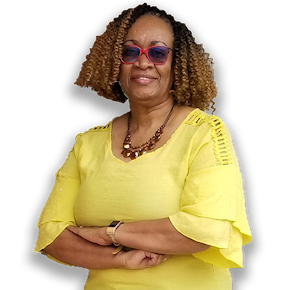
In this episode, Dr. Sev and Linda Grizely unpack why most budgets fail: they’re built against your personality, not with it.
Linda shares how one simple experiment led to the ME Money Method — a framework that helps you spend without guilt and save without deprivation.
You’ll discover why your money personality matters more than any spreadsheet, how to give yourself permission to enjoy the money you’ve worked hard for, and why understanding your emotions around money is the real first step toward financial confidence.
****************************************************
Join Dr. Sev’s Wealth Warriors Community for more financial discussions and insights (FREE to join): https://www.skool.com/wealth-warriors-community-1025/about
****************************************************
The Dr. Sev Talks Money podcast’s mission is to empower women to approach money confidently, reframe their financial habits, and build a future where their money is a tool for opportunity and security.
Through Dr. Sev Talks Money YouTube channel and Podcast, I provide actionable advice and inspiration to help you achieve financial freedom. Join me for one-on-one coaching, group sessions, workshops, or speaking engagements as we journey to financial empowerment together. It’s never too late to begin again—let’s make it happen!
Here is one way you can support the Dr. Sev Talks Money podcast and YouTube channel:
https://www.buymeacoffee.com/DrSevTalksMoney
My website: http://www.sevtalksmoney.com
YouTube: https://www.youtube.com/c/DrSeverineBryan–SevTalksMoney
LinkedIn: https://www.linkedin.com/in/severinebryan/
****************************************************
Linda’s links
Website: https://www.LindaGriz.comInstagram: https://www.instagram.com/lindagrizelyFacebook: https://www.facebook.com/thelindagrizelyLinkedIn: https://www.linkedin.com/in/linda-grizelyYouTube: https://www.youtube.com/@LindaGrizelyResources/Freebies: https://www.lindagriz.com/resources (Free Money Personality and Financial Confidence quizzes and more)
Linda’s Bio:
Linda Grizely (pronounced Grizzly, like the bear) is a personal finance educator, motivational speaker, and the creator of the MeMoney™ method – an approach that helps women stop putting themselves last. Because you can’t build a life you love on a budget you hate. Linda offers online courses in all things personal finance, blending practical tools with deep emotional clarity. A former teen mom who went back to college at 48 and built a multi six-figure financial career, she now helps women reclaim financial confidence and think bigger about what’s possible. She’s a personal growth junkie – continually learning -consistently working on leveling up – and always trying to think bigger
Transcript

Hey, hey, hey, Savvy Squad. Welcome to another episode of the Dr. Sev Talks Money, YouTube and podcast where we empower women to manage money confidently. Today we’re exploring a topic that so many of us wrestle with the emotions behind our budgets and why clarity with money starts with self-trust, not just numbers.
My guest today is Linda Grizely, a personal finance educator, motivational speaker, and the creator of the ME Money Method. An approach that helps women stop putting themselves last and finally build a budget. They don’t hate
a former teen mom who went back to college at 48 and built a multi-six figure financial career. Linda now empowers women to reclaim financial confidence and think bigger about what’s possible. Linda, welcome to the show.
Thanks so much for having me.
You are welcome.
You know, my motto is, is never too late to begin again, and I’m just loving the theme that’s resonating throughout all of what you’ve shared. So, before we dive into the money conversation, I’d like to start off with an icebreaker to keep things light. If you suddenly found $5,000 that had to be spent on pure joy, no bills, no responsibilities, what would you do with it?
I would go on a beachy vacation.
So that you
Nice and warm and Yeah.
Sounds like you love the beach.
I do. Yeah. Um, I’m a sunshine girl all the time. I live in Illinois. And if it would be summer year round, I’d be happy, but it’s not here.
All right. So for those who are not familiar with you, could you please introduce yourself?
Sure. So, uh, Lynn Grizely and I am a, uh, personal finance. Expert speaker. Um, I’m all about financial wellness. Um, I also do coaching for, um, people who feel like they’re behind with money and wanna understand finance better, so teaching people about that. But really it’s all, everything that I do is all about financial wellness and making sure that people.
Feel confident with their money and good about how they’re spending it and bringing them like their personality into the way that they interact with money into all of my teaching and coaching so that you know, they’re working with themselves instead of against themselves.
Yeah, I, I love that, um, bringing the person in because it’s not about just personal finance, the theory and all those things.
If it doesn’t apply to you based on where you are, then it’s, we’re just speaking into the void. So I love that.
Yeah.
Well, let’s start digging into your core message. You say you can’t build a life you love on a budget you hate. Talk to us about that.
Yeah. That goes, this goes right along with the idea that you have to figure out who you are as a person and how you interact with money. And then when you’re, when you’re building your financial structure, when you’re coming up with a plan or a strategy, you have to make sure that you’re not working against yourself.
So, for instance. Um, part of what I do is I help people identify a simple money personality that they have. So if, if you are a spender and you like to spend money, that’s not a bad thing. That just means that, that you naturally like to do things and maybe you’re spending money on other people. Maybe it’s not even yourself, but understanding that that’s the way you interact with money.
Is a part of it because if you start to put yourself on a strict budget and you’re, you know, trying to fit within all these lines, but your natural instinct is just to go and do, then you’re working against yourself. So you have to come up with something that’s a little bit more flexible for you or just makes you be more intentional to understand how you’re spending your money.
Yeah, and I have seen so many people who say, they hate budgeting, but that’s because the budget, they are being told to conform to a budget. Rather than have the budget conform to their lifestyle and to how they live. So yes, I love that approach.
Now talk to us about Me Money, your program that you’ve created. What’s the story behind it and why do you see it as a game changer?
So I’m gonna start with a story behind it because,
okay.
It came about because I put my husband on a budget. I gave him an allowance, basically, and I said, so without even knowing that this was gonna be a thing.
I just said, I’m, I’m putting you on a budget. You get this much to spend. Every time you know, you get a paycheck, we’re gonna put, give you this much. And anything that you do that’s just for you needs to come outta that. That means you have to live within the means of that money. So if you’re planning something in advance, you have to save it from that.
Um, you need to make sure that, that you’re, this is all that you’re spending. That’s only for you. So not budgeting him on anything else, you know, uh, just for the things he’s doing on his own. And the purpose behind it wasn’t to be restrictive or to control him. It was because I wanted him to have more awareness of the money that he was spending, because he would say things like, oh, it’s not a big deal, it’s just, you know, this little bit.
But he wasn’t realizing that all of those little bits were adding up to a lot. So I put him on this budget and he said, well, are you gonna do the same thing for you? And I said, sure, absolutely. I’ll do the same thing for me. Same amount of money. Because, you know, we live under the same roof, same lifestyle.
Doesn’t matter who makes more money, we’ll give ourselves each this little allowance of budget of money that we’re allowed to spend on ourselves. So I already knew how much money he was spending because I track everything. So I knew that he wasn’t going to feel too restricted, but I knew that it was also gonna be something that would make him pay attention.
So it was enough to pay attention, but it was not too much to feel like too much restriction, like he’d have to stop doing his things that he does. ’cause again, the purpose wasn’t to restrict him. It was to. Give him awareness. So I came back a couple months later and I asked him how it was going and he said it was fine and that he was just making better choices.
And I was like, oh, better choices. Tell me more. Like this is working out better even than I thought it would. ’cause my whole purpose was just to have him understand what he was spending. And so he said, you know, I saw a golf shirt that I wanted. He’s a golfer and a fisher fisherman. And so he saw this golf shirt and he said, I didn’t buy the golf shirt because I knew that if I bought the golf shirt, that that money would come out of the fund that I was saving for to go on a golf trip.
So he is like, I would rather wait and spend it on the golf trip. So he didn’t buy the shirt. And I said, well, how did that make you feel? He was like, fine. I’m like, do you feel bad that you didn’t get the shirt? No, he didn’t. Do you wanna go back and get the shirt? No, I don’t need it. I have a whole closet full of shirts and I’d rather go on the trip, so, and I said, but if you weren’t on this, on this budget, you would’ve bought the shirt and gone on the trip.
He said, yeah, absolutely. So he would’ve spent more money if I hadn’t given him this. But he wasn’t feeling restricted or deprived by it. He just was making a better choice, and that was fantastic.
Yeah, that is such a turning point, I’m sure. Um, and there are people who are maybe listening who could probably resonate with that because a budget is not a restricted thing.
It is a thing that allows us to live more freely when we know what. What is in our, our control? What, what is in our boundary? And when we set that boundary for ourselves, then we are free to live within that boundary. Because again, if he had spent that the on the shirt and then gone on the golf trip, then the next time when he looked at his money, he would’ve been like, okay, I’m gonna be short somewhere else.
But now he’s making a strategic choice versus just. Spending because it’s still his money to spend how he wants to, but it’s now more a, a strategic choice. And that’s what, when we talk about budgets, that you’re listening to us, we’re talking about making strategic choices that benefits you anyway, so
yeah. Yeah. So do, do you wanna add anything else to that?
I do. Can I tell, so then I would, I need to tell my side of the story. Okay. So remember I put myself on the same budget. So I was always the person who would say, oh, I can’t afford to do that. I can’t go on that girl’s trip. I can’t do this. Um, but I, I’m, I, it’s not that I wouldn’t spend money on myself, it’s just that I would justify.
More smaller purchases than say maybe one larger purchase. And I would always feel guilty when I spent money on myself because I was thinking, gosh, I should be saving this. This should go towards my retirement or my emergency fund, or something more important, whatever. Um, so now that I had the same budget.
I finally had permission to spend money on myself. So instead of buying 10 little things for $10, I would buy the a hundred dollars thing. I was able to buy like a whole face cream regimen that I really wanted, that I thought I would never have spent that money on myself before if I didn’t have this money already set aside because the money was already there for me.
So it gave me the ability to spend without guilt. Um, and so. It was mind changing for me too, which is when I decided like this, there’s really, there’s something here because this has been, you know, uh, a mindset shift for both me and my husband. And so I started, uh, having clients implement the same thing and.
They too found that it was, it was very much a mindset shift in the way that they spent money, and it works with almost any money, personality. I think it works with all money personalities. I can’t say it works for every single person, but it does because it gives intention. Two, the money that they’re spending.
And it, it creates like a question each time. Like, is this worthy of my money or would I rather spend my money on something else? So there’s always that thought process rather than just spending money willy-nilly.
Yeah. You said something, you said it. I gave myself permission and that is such a key word.
Um, because. I’m like you, I’ll be like, no, this is, I don’t think I wanna spend that. No, I don’t think I wanna spend that. But when we create a budget that gives us permission to enjoy our money, ’cause I’m a saver. So, and it’s, it’s, I have to remind myself it’s your money. Enjoy it. Uh, so when we give ourself permission within the guidelines of our budget, it makes it the choices that we make with our money, uh, more enjoyable.
And so that really resonated with me, and I’m sure people who are like me who are savers and chronic savers, I call it, it gives them permission to enjoy their money.
Yeah. Yeah. It’s, it’s especially helpful I think for women that have a lot of guilt and shame around money to and, and are sometimes like looked at like.
They buy things that, that men can’t understand, but men buy things that women don’t seem to understand either. But the idea behind it, like in a, in a partnership, like with my husband, we never asked, we never had an answer to each other. It wasn’t about that. But in some relationships there is that where you feel like you have to answer to the other person.
But the idea behind me, money is, let’s say. I mean, let’s talk about shoes, because shoes seem to be a big thing. Women like the designer shoes. Men also now have all the, the, the tennis shoes, the sneakers, the, the Jordans, whatever they are, all the, you know, they spend a lot of money on shoes now too. So people might sometimes say like, wow, that’s way too much money to spend on a pair of shoes.
But here’s the thing, if you have money set aside, that’s just for you and it’s earmarked for you, and you can do whatever you want with it. Then if you wanna buy shoes, buy shoes. If that’s what makes you happy, and that’s what you really want. And you don’t have to answer to anyone, not even yourself.
’cause in my case, I was always answering to myself like, oh, you can’t do that. You know? Um, but if it’s there and you’re staying within the means of that, whatever it is that brings you joy is what you can spend your money on. And who cares what anybody else thinks because you’ve already set that aside and it’s a, it’s a line item for you.
Yeah. Yeah. Let’s lead into talking about the emotional chaos behind budgeting. Uh, because for women we tend to carry some common money belief that may be working against us. So what are some things that women can reframe in order to feel freer about spending their own money that they’ve worked so hard for?
Right. We’ve worked hard for that money and it’s okay to enjoy it. So what are some things that we can reframe so we can enjoy our money better?
I think using the me money method where you put that aside, works for, like I said, almost any money, personality. Um. Almost every person. It works with every money, personality.
But here’s the thing, if you, if you’re a saver or even a security seeker, which is a person who just really likes everything planned out, having that set aside in there is that, that’s that permission and allows you to do that. Now, there’s also. Avoiders out there. Now avoiders just don’t even wanna think about money.
They’re like, as long as there’s money in the account and I’m paying my bills, I’m gonna do whatever I want and I’m not even gonna think about it. And so they’re like just avoiding it because it’s, they feel like it’s too complicated, or they’re afraid that if they really look at it, that they’re gonna feel like they’re behind or that they’ve done something wrong.
Um, but by just taking this one little piece makes like your overall finances less overwhelming. ’cause if sometimes people think about it like. Gosh, I need to create a budget or I need to do a whole financial plan and like this huge thing. And it’s so overwhelming. So they do nothing. And this is an easy way to take one little piece and do that and pay attention to it.
So for instance, if you’re, if you’re a person who avoids it, I know lots of women and men who are avoiders because they feel like they don’t know about it, it’s too complicated. They just are afraid to face it. This gives them this one little piece to pay attention. And honestly, once they start paying attention to that little piece, it opens their mind up to all the other pieces where they’re like, oh.
And then they start thinking more about the other places where they’re spending money or saving money, or not spending or not saving. Right. So they start thinking bigger about it after they get a handle on what’s going on with just them personally.
Yeah, I think that’s a good place to, to take a break.
Um, and we’ll come back with more discussions with, Linda.
Hey friends, quick pause. If you’re enjoying today’s episode, the best way to support the show is to share it and leave a rating on your favorite podcast platform. And you know it. Five is our favorite number, and if you’re watching on YouTube. Don’t forget to like, subscribe and share. Thank you. Okay, so let’s continue with, Linda, our discussion on the emotions behind our budget and ways that we can make our budget work for us work in our favor, because again, it’s our money and we just want to create a, a system that helps us to enjoy it.
To the full rather than feel guilty. Now, Linda, you say start where you are. What does that look like in real life and what’s the first step for someone who feels behind?
So when I say start where you are, I mean, basically today’s the first day of the rest of your life, right? And showing up and starting to pay attention to your money, or learn about money and personal finance.
Is the first step, and don’t feel like you have to do it all at once. Take one little piece. It could be the me money piece. It could be just looking at your bank statements or online and seeing what charges are going through, and understanding what your cash flow is, what’s coming in, what’s coming out, uh, starting to build that emergency fund that maybe you’ve been putting off, because it just seems like there’s so many other things happening.
Starting to invest. Like pick one little thing and start paying attention to that. The other thing that I like people to do is pay attention to their emotions. When money is involved, when you’re buying something, you know when you’re hitting click, add to cart on Amazon, whatever. When you’re buying that latte, when you’re doing all whatever it is.
Paying your bills, right? That might be a, a, a worse feeling, but pay attention to the feelings that you’re having and understand. Try to understand where they’re coming from and why they’re why they’re there, because the more you understand about how you feel and how you’re driven by your emotions, um, with money, the better you’re gonna understand your money patterns.
Because money is really emotion first and money’s second.
Yes, yes. It’s the, the numbers are such an, um, I don’t, I don’t know if the word is insignificant. Insignificant because our money is significant, but, um, in the, in the grand scheme of things, the numbers themselves or just numbers. The things, the decisions that we make are driven by our emotions, by the things we tell ourselves about the money rather than the money itself.
Because I can have $10,000 and somebody else has $10,000 and they’re able to spend that with no guilt. But then I’ll spend it with guilt because in the back of my mind I’m thinking about that I’d never had enough growing up, or I was always hungry growing up or, or something like that. Those stories that.
Originate from way back when, drive the money decision and the money behavior. So it’s not the money so much as it is the behavior around the money and the thought patterns around why and how we spend our money.
Exactly. And everyone’s story is so different.
Yes.
For instance, you might be someone who grew up, you know, relatively poor and they’re, they were always told no when they wanted something.
And then once you’re old enough to make your own money, maybe you’re always telling yourself Yes. And that can be a problem if you’re always saying yes. Um, maybe you’re someone who grew up with a lot and now you’re on your own and you don’t have a lot and you’re feeling. Very restricted and feeling very like you don’t have enough because you’re living a different lifestyle than you were used to.
Or you’re trying to live a lifestyle that you’re, you can’t afford one of the two. Right? So there’s so many different things that play into it, and I think once we start paying attention to our emotions, we start understanding why we’re stressed out with money, why we avoid money. You know, and, and all those things that lead into, you know, are either financial success or demise.
Yes. Yes. Um, that leads me to self trust. Let’s talk to, uh, that woman or man who’s listening and self-trust is an issue. How can they begin practicing self-trust in their everyday financial choices?
Uh, baby steps, like, I mean, pretty much the things that I said before, like picking something to start paying attention to and to have intention around with your money and getting to know that one thing about. Your money relationship really well, whether it’s knowing what your cash flow is, watching your statements, seeing like everything that’s going out to make sure that you know, you don’t have extra subscriptions, you forgot, you forgot about, or thinking about the things that you’re spending money on and like, did I really need to spend money on that?
Not to make yourself feel guilty about it, but just to say, Hey, I’m gonna make better choices in the future.
Okay. So, um, let’s talk a little bit, let’s go back to the beginning where I introduced you and talked about you being a teen mom, going back to college. Um, what kept you moving forward during the hardest seasons? And I know there had to be some hard seasons.
Or there were a lot of hard seasons. I have recreated myself more times than I’d like to admit.
Um, I was a teen mom and then I was a married mom of three, and then I got divorced and I had two kids at home still. And that’s when, actually when I met back to college after I got divorced. So, or went, I should say, went to a four year college. I did go to a two year college before. But, um, I think that what really kept me going is always just the desire to.
To, to be more and do more. And really it’s just been a journey and it still is. It’s not over. It’s still just a journey about becoming my best self and being the best person that I can be. And part of that is helping other people with the things that I’ve learned along the way. Um, but yeah, it’s, it’s been, you know, there’s been a lot of, of hard things that I’ve had to do.
Yeah. Yeah. Um, and I hope that encourages, um, a woman who is listening who may have gone through divorce is going through divorce, uh, to know that there is life after divorce. I can tell you at the moment, you don’t feel like. Things, uh, will turn around that there’s a light at the end of the tunnel, but I’m an example.
Linda’s an example that it happens, it will turn around and, um, this is not being Pollyanna-ish, it’s just letting you know that what you feel. Right now is not how you always feel. I can promise you that.
Yeah.
And you know, surround yourself with people who will speak life into you. Not n necessary to talk about the divorce itself, but who will speak life into you, who will help you see your money, see your way through any money issues that you are having right now.
Uh, because a divorce is gonna cause financial, um, you know, instability. And, you know, surround yourself with people, with community, um, and the people who can help you see that there is a light beyond the tunnel. And hold your hand if you need, if you need to give your shoulder to cry on. And I know this is not a divorce show, but, um, me, as a somebody who’s gone through divorce, I like to encourage women.
Especially who are typically not the CEO of their families or the CFO, the certified financial officer of their families when they’re going through divorce, they are now finding their footing not only as a divorce mom or divorce person, but also finding their footing with their money. And, and so I hope this little segment has encouraged you in, in some way.
So Linda, any thoughts that you, final thoughts that you’d like to leave with our listeners before we share where they can connect with you and, and anything that you have going on?
I would just say your success depends on, on what you put into it, right? So with money, with life, whatever you have to put in to get out.
So. Um, you know, start small and, and work on it. If you wanna start bigger and you’re no overachiever, go right ahead. But the important part is, is to start where you are and just get going.
Yeah. I, and I concur. So where can listeners find you and do you have anything going on that you’d like other listeners to support you?
Oh, sure. Listeners can find me on my website at lindagriz.com. L-I-N-D-A-G-R-I Z.com and on there they can find a money personality quiz, learn more about my, my me money method. Uh, there’s a course that they can take and there’s a bunch of, uh, free stuff they can download on my resources page. And, um, really, I mean, if they want more support, there’s coaching available and you know, just reach out, follow me on social media, do all the great stuff.
Hopefully you’ll, you’ll learn some stuff from me.
Yeah, so definitely. Um, again, it’s Linda L-I-N-D-A-G-R-I Z.com and I’ll have that information in the show notes. Linda, thank you so much for coming on the Dr. Sev Talks Money podcast and sharing not only your experience, but sharing how. Anyone in that same position can learn from you and apply to their lives, and also sharing all the nuggets that you’ve learned along the way and your me money program.
How it can possibly help for those of us who maybe don’t have the, the structure in our lives. ’cause we all mean structure in some form. And for those who don’t have the structure, checking out your website and see, exploring all of the free resources, including the ME money process, the free personality quiz, all of those to help us manage our money.
Because again, as we said at the beginning of the show and throughout the show. It is not about the numbers so much as our approach to the numbers, and you have the resources on your website that they can use to learn more about themselves as they continue this money journey. So thank you again. So much for having me.
You are welcome. And so for my listeners, thank you for sticking around and listening and continuing to support, uh, the Dr. Sev Talks Money podcast. As always, please take care of yourself and your money.